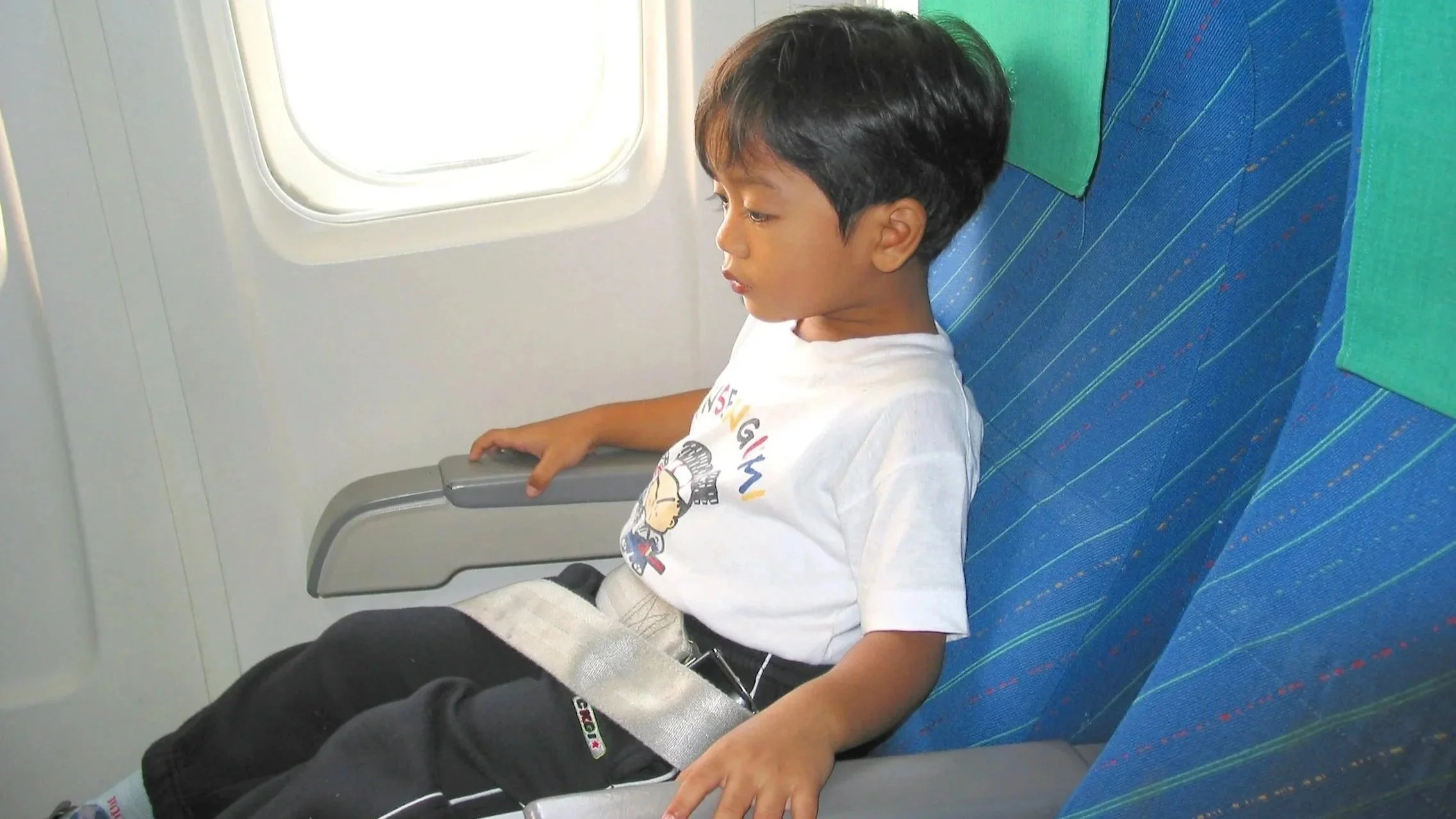
If you have ever watched your child hesitate before answering the question “Where are you from?”, or noticed them slip between languages depending on who is in the room, you have already met your own third culture kid. It is one of the most common experiences I encounter in my work with expatriate and internationally mobile families, and yet it is still rarely explained well.
In this guide, I want to walk you through what the term “third culture kid” actually means, where it comes from, and, most importantly for the families I work with, what it means for your child's language development and sense of identity. As a multilingual family consultant who has spent over a decade supporting families raising children across cultures and languages, I have seen firsthand how much relief parents feel simply from having a name for what their child is experiencing.
What Are Third Culture Kids? (Definition and Origins of the Term)
The term “third culture kid” (often abbreviated TCK) was coined in the 1950s by American sociologist and anthropologist Ruth Useem. While researching expatriate American families living in India, Useem observed something interesting: these families did not fully belong to the culture they had come from, nor did they fully belong to the host culture they were living in. Instead, they had developed a distinct way of life, a “third culture,” shared with other expatriates navigating the same in-between experience. The children raised within this shared, mobile way of life became known as third culture kids.
It is worth clarifying, since the terminology can be confusing at first glance, that “third culture” has nothing to do with the “third world.” The term simply refers to a culture that is neither the first (the parents' culture of origin) nor the second (the host country's culture), but a third and genuinely distinct one.
Decades later, researchers David Pollock and Ruth Van Reken, two leading authorities on global mobility and transition, refined the definition in ways that are still widely used today. In their framework, a third culture kid is a person who has spent a significant part of their developmental years outside their parents' culture. Rather than fully mastering any single culture, TCKs build relationships across all the cultures they encounter, while their strongest sense of belonging often comes from other people who share a similarly mobile, cross-cultural background, regardless of nationality.
This matters for the families I work with because it reframes what can otherwise feel like a problem to solve. A child who does not identify neatly with “your” culture or the local culture is not failing to integrate. They are simply becoming who a third culture kid becomes: someone whose identity is built from pieces of several worlds.
Who qualifies as a third culture kid?
In my consulting practice, this typically includes:
Children of expatriate professionals who move for work
Children of diplomats, military families, and missionaries
Children of immigrants and refugees who grow up between their family's culture and their new home
Children attending international schools with a highly mobile, multicultural student body
“Cross-culture kids” more broadly, a related, broader term some researchers use to include children of bicultural or interracial families, even without a physical relocation
The Unique Strengths of Third Culture Kids
It is important that this conversation does not start and end with challenges, because in my experience, the strengths third culture kids develop are just as real, and often more visible over the long term.
International educators and researchers alike consistently observe that children who move across cultures more than once tend to adapt to new environments with remarkable ease. They are, generally speaking, more open to different viewpoints and new experiences, and they often display a level of self-confidence and independence that surprises even their own parents.
From my own experience working with multilingual and internationally mobile families since 2014, I would summarize the strengths I see repeatedly in third culture kids as follows:
Cultural flexibility. TCKs learn early on to read social situations across different cultural codes, adjusting their behavior, communication style, and even sense of humor depending on context.
Broader worldview. Having lived the reality that there is more than one “normal” way to do things, TCKs tend to approach unfamiliar situations with curiosity rather than anxiety.
Cross-cultural empathy. Many TCKs develop an intuitive understanding of what it feels like to be the outsider, which often translates into genuine sensitivity toward others who are new, different, or struggling to fit in.
Linguistic agility. Most third culture kids grow up multilingual by necessity, and, as I explain in more detail in my guide to raising bilingual children, this regular use of more than one language is linked to cognitive flexibility, stronger metalinguistic awareness, and an easier time acquiring additional languages later in life.
Resilience. Having navigated multiple transitions - new schools, new friendships, new languages - TCKs often build a form of resilience that serves them well into adulthood, even if the transitions themselves were difficult at the time.
None of this means the journey is easy. It simply means it is not only difficult, and I think it is important for parents to hold both truths at once.
Challenges Third Culture Kids Face: Language and Identity
The flip side of all this flexibility is that it (sometimes) comes at a cost, and the two challenges I hear about most often from the families I work with are language loss and a complicated sense of belonging.
Language Loss and Language Confusion
Many parents I meet worry, quite understandably, that their child is “losing” a language rather than simply developing it unevenly. In my experience, what looks like confusion is very rarely actual confusion, it is usually the ordinary, well-documented result of uneven exposure between the languages a child is growing up with.
A third culture kid's linguistic profile is shaped heavily by what researcher François Grosjean calls the “principle of complementarity”: bilingual and multilingual people generally use each of their languages for different purposes, in different areas of life, and with different people. A child who attends an English-medium international school, speaks the local language with friends, and hears a heritage language at home will naturally develop different vocabulary and different levels of fluency in each context. This is not a flaw in the system. It is the system working as expected.
That said, real language loss (sometimes called subtractive bilingualism) does happen, particularly when a family language is not actively maintained across a move, or across several moves. This is one of the reasons I dedicate an entire guide to the topic - if this is your primary concern, my article on heritage language maintenance goes into much more depth on how to prevent it.
It is also worth remembering Jim Cummins's well-known distinction between BICS (Basic Interpersonal Communicative Skills: the everyday conversational fluency a child typically picks up within one to two years of exposure) and CALP (Cognitive Academic Language Proficiency: the more complex, school-related language competence that can take five to seven years to develop fully). A third culture kid who moves schools and languages frequently may sound fluent in the playground far sooner than they become fully competent in an academic setting, and parents and teachers alike sometimes overestimate a child's readiness for demanding schoolwork in a new language as a result.

Belonging: “Where Are You Really From?”
The second challenge is less linguistic and more existential, though the two are deeply connected: the question of belonging.
“Where are you from?” is one of the most ordinary questions in the world, and for a third culture kid, it can be genuinely difficult to answer. Is it where they were born? Where their parents are from? Where they currently live? Where they feel most at home, which may not be any of the above?
I have sat with many families where a child, sometimes as young as seven or eight, has already developed a rehearsed, slightly weary answer to this question, because the honest answer takes longer to explain than most people have patience for.
This is closely tied to what Pollock and Van Reken describe as a TCK's tendency to feel a sense of belonging not to a specific country, but to other people who share a similarly mobile background, other TCKs, in other words, wherever they happen to be from.
It is also connected to language: a child's dominant language, their sense of which language “feels like them,” and their cultural identity are often intertwined in ways that shift over time and across contexts.
As I discuss in more detail in my article on receptive bilingualism, a child's relationship to a language is rarely just about vocabulary, it carries emotional weight, questions of identity, and sometimes a degree of quiet resistance.
How Parents Can Support Their Third Culture Kid's Language Development
There is no single formula, because, as I remind every family I work with, each child's linguistic and cultural situation is unique. That said, a few strategies consistently make a meaningful difference:
Name the experience. Simply introducing your child to the concept of a “third culture kid” can be validating. Many TCKs, once they learn the term exists and that millions of other children share their experience, feel less alone in what had previously felt like a very personal, hard-to-explain confusion.
Protect quality exposure to every language, not just quantity. As I explored in my guide to the one parent, one language method, consistency matters more than rigid rules. What your child needs is regular, meaningful, emotionally engaged exposure to each of their languages, not a strict formula that becomes a source of stress for the whole family.
Keep transitions in mind when planning language exposure. Before an international move, it can help to proactively increase exposure to the language that is likely to become “weaker” in the new environment, rather than waiting until the shift has already happened.
Validate mixed or evolving identity, rather than asking your child to choose. Resist the well-meaning but limiting instinct to ask, “But which do you feel more, Italian or German?” A third culture kid's identity is not a pie that must add up to 100%; it can include multiple, sometimes seemingly contradictory, belongings at once.
Build a “portable” sense of continuity. Rituals, books, songs, and family stories that travel with the family - regardless of which country you are in - give a third culture kid an anchor that is not tied to any single place.
Watch for the pattern, not just the moment. A single instance of a child refusing to speak a language, or claiming they “hate” a culture, is rarely meaningful on its own. What matters is the pattern over time, and whether the child has consistent, positive opportunities to engage with all the languages and cultures in their life.

Heritage Language and TCKs: Keeping the Connection Alive
For most third culture kids, the heritage language - the language (or languages) tied to family, ancestry, and cultural roots - is the piece of the puzzle most at risk of being crowded out, simply because it is usually not the language of school or the wider community.
In my consulting work, I encourage families to think of the heritage language not as one more subject to “keep up,” but as the through-line that gives a mobile child a stable sense of who they are, regardless of which country they are living in this year. A child who can speak comfortably with grandparents, cousins, and extended family in the heritage language has access to a form of belonging that does not depend on geography at all.
Some of the most effective strategies I recommend include:
Making the heritage language the consistent language of the home, even across international moves
Prioritizing regular visits - or, when that is not possible, frequent video calls - with relatives who speak the heritage language
Seeking out heritage language schools, weekend programs, or online tutoring, particularly once a child reaches school age and academic language demands increase
Normalizing the heritage language as something to be proud of, rather than something to apologize for in front of peers who do not share it
If heritage language maintenance is your main concern, I go into considerably more depth, including specific strategies for building a language-rich home environment, in my full guide to heritage language.
When to Seek Professional Support for Your Third Culture Kid
Most of what I have described here - uneven language development, complicated answers to “where are you from,” moments of resistance to one language or culture - falls well within the range of typical third culture kid development. It is not, on its own, a sign that something is wrong.
That said, I do recommend seeking additional support in a few specific situations:
If your child shows signs of persistent sadness, anxiety, or withdrawal connected to identity or repeated transitions, rather than the more typical adjustment period after a move
If language difficulties appear in every language your child speaks, rather than being limited to the language they are exposed to less - this may point toward a broader language development question rather than a typical multilingual pattern (my guide on bilingual child speech delay explains this distinction in more detail)
If a school or teacher recommends dropping one of your child's languages entirely to “fix” academic struggles - this advice is very often given by well-meaning professionals who are not specifically trained in bilingual or multilingual development, and it deserves a second, specialized opinion before you act on it
If you, as a parent, feel persistently overwhelmed trying to navigate your family's language and identity questions alone
As a linguist and family consultant, my own training does not extend to diagnosing language disorders or mental health conditions - that falls to speech-language pathologists and licensed mental health professionals, and I always recommend involving them when something feels outside the range of typical development.
What I can offer is guidance grounded in bilingual and multilingual development research, along with a decade of direct experience supporting expatriate and internationally mobile families through exactly these questions. If that is where you are, I would be glad to help.
Frequently Asked Questions About Third Culture Kids
-
A third culture kid is someone who has spent a significant part of their childhood outside their parents' home culture, and who has developed a distinct sense of identity shaped by multiple cultures rather than belonging fully to any single one.
-
Not necessarily, but it is extremely common. Most TCKs are exposed to at least two languages - a family or heritage language and the language of the community or school they live in - and many grow up speaking three or more.
-
The terms overlap but are not identical. “Expat child” simply describes a child living outside their country of origin, while “third culture kid” describes the deeper cultural identity that often develops from that experience, particularly with repeated or long-term mobility.
-
Some do, particularly around questions of belonging and “home,” but many describe their multicultural upbringing as a source of strength once they reach adulthood. In my experience, the difference often comes down to whether their multiple languages and cultures were actively supported and validated during childhood, rather than treated as a problem to resolve.
-
Rather than pushing your child toward a single, tidy answer, help them build a version of the story that feels true to them, even if it takes a sentence or two longer than other people's answers. Practicing this together, in a low-pressure setting, can make a real difference when the question comes up in the classroom or with new friends.
-
Yes, this is very common and usually reflects which language or culture the child is exposed to most, rather than a rejection of the other. It often shifts over time, especially after a move, a change of school, or entering a new stage of adolescence.
Personalized Support for TCK Families
Every family living across languages and cultures has a story that does not fit neatly into a blog post. If you are navigating an international move, trying to keep a heritage language alive, or simply want a clearer picture of your child's multilingual and multicultural development, I would love to help you build a plan that fits your specific situation.
You might also find my work as an expat parenting coach useful if your family is preparing for, or currently navigating, a move abroad.
About the Author
Dr. Karin Martin is a linguist, multilingual family consultant, author, trainer, and founder of The Multilingual Garden. She holds a PhD in Linguistics and has worked with multilingual families, educators, and international schools since 2014, supporting children growing up with more than one language.
Her work bridges research and real family life, helping parents make informed, confident decisions about heritage language maintenance, multilingual parenting abroad, school transitions, and family language planning.
She is the author of Watch Your Language, Mom! A Guide to Multilingualism and supports families through private consultations, parent seminars, training programs, and practical resources on multilingual child development.
References
Cummins, J. (1979). Cognitive/academic language proficiency, linguistic interdependence, the optimum age question, and some other matters. Working Papers on Bilingualism, 19, 121–129.
Grosjean, F. (2010). Bilingual: Life and reality. Harvard University Press.
Moore, A. M., & Barker, G. G. (2012). Confused or multicultural: Third culture individuals’ cultural identity. International Journal of Intercultural Relations, 36(4), 553–562.
Mosanya, M., & Kwiatkowska, A. (2023). Multicultural identity integration versus compartmentalization as predictors of subjective well-being for third culture kids: The mediational role of self-concept consistency and self-efficacy. International Journal of Environmental Research and Public Health, 20(5), Article 3880.
Pollock, D. C., & Van Reken, R. E. (2001). Third culture kids: The experience of growing up among worlds. Nicholas Brealey Publishing.
Useem, R. H., & Downie, R. D. (1976). Third culture kids. Today’s Education, 65(3), 103–105.