**This article is for informational purposes only and does not replace a professional evaluation. If you have concerns about your child's speech or language development, please consult a qualified speech-language pathologist.**
You compare your bilingual toddler's vocabulary to her cousin's monolingual two-year-old, and your child seems behind. Maybe a teacher mentioned it. Maybe a relative did, in that particular tone. And now you're awake at midnight, searching for answers.
Here's the direct one: bilingualism does not cause speech and/or language delay. The consensus among researchers in the field of bilingualism is that bilingual children reach key language milestones within approximately the same range as monolingual children. However, bilingual children may follow a slightly different pattern than monolingual children - and knowing the difference between a true delay and a normal bilingual pattern is essential, both for your peace of mind and for your child's care.
This guide walks you through what the research actually says, what typical bilingual language development looks like at each age, the clear red flags that warrant a professional evaluation, and exactly who to call if you see them.
In this article, we will explore:
Do Bilingual Children Really Talk Later? What the Research Actually Says
Bilingual Language Development Milestones: What to Expect at Each Age
Signs of Speech Delay vs. Signs of Normal Bilingual Development
Red Flags: When You Should Consult a Speech-Language Pathologist
Common Causes of Speech Delay in Bilingual Children (Beyond Bilingualism Itself)
What You Can Do at Home to Support Your Bilingual Child’s Language Development
When to Consult a Speech and Language Therapist or Multilingual Family Consultant
How to Find a Bilingual Speech-Language Pathologist
Frequently Asked Questions About Bilingual Speech Delay
Get Expert Guidance for Your Multilingual Family
Do Bilingual Children Really Talk Later? What the Research Actually Says
This is the question behind almost every late-night search about bilingual speech delay, so let's answer it clearly: no, bilingualism itself does not cause children to talk later than their monolingual peers.
This is one of the most extensively researched questions in child language development, and the evidence is consistent. Linguist Laura-Ann Petitto and Ioulia Kovelman’s work on early bilingual acquisition found no evidence of language delay in young bilingual children acquiring two languages from birth. Their study showed that early bilingual children reached key early milestones, including first words, first word combinations, and early vocabulary growth, within the expected range for monolingual children.
Barbara Zurer Pearson's research on bilingual vocabulary growth - summarized in her widely cited book Raising a Bilingual Child - found that while bilingual children's vocabulary in any single language may look smaller on a standard monolingual checklist, their total vocabulary across both languages is comparable to monolingual norms.
Erika Hoff's research on input and bilingual vocabulary development reinforces the same point: what matters most for vocabulary growth is the amount and quality of language input a child receives, not the number of languages.
So why does the myth persist? Understanding its origins helps explain why it still circulates today.
The Myth of Bilingualism Causing Speech Delay
The idea that raising a child with two languages confuses them or slows them down traces back to flawed studies from the early twentieth century, many of which compared the children of working-class immigrant families (who often faced poverty, limited schooling, and social disadvantage) against monolingual, often more privileged, peers. The “delay” researchers observed had far more to do with socioeconomic circumstances than with bilingualism itself, but the conclusion that stuck, unfortunately, was “bilingualism is the problem.”
Modern research, conducted with far more rigorous methodology, has overturned this idea. Bilingualism is not a risk factor for language delay. Bilingual children may distribute their vocabulary and language use across two or more languages, but this does not mean that bilingualism itself causes delayed speech or language development.
At the same time, the research on bilingualism is more complex than a simple “bilingual advantage” narrative. Many studies now question whether bilingual and monolingual children can be compared as two neat categories, especially when children’s language exposure, socioeconomic background, education, and learning context vary so widely. What we can say with confidence is this: growing up with more than one language does not, in itself, harm language development.
The old myth, however, still lingers in pediatricians’ offices, family group chats, and well-meaning advice from relatives - which is exactly why so many parents still arrive here worried.
What's Actually Different About Bilingual Language Development
Bilingual children don't develop language more slowly. They develop it differently in some specific, well-documented ways:
Distributed vocabulary.
A bilingual child's words are split across two languages, so a single-language count can look lower even when total vocabulary is age-appropriate.
Code-mixing.
Combining words or grammar from both languages in the same sentence (“I want more agua”) is a normal, even sophisticated, feature of bilingual development, not a sign of confusion.
A shifting dominant language.
Which language a child prefers can change with circumstances: a move, a new school, more time with one set of grandparents.
Reduced verbal participation in a new language.
When children enter a new language environment, they may speak very little in that language at first. This should not simply be dismissed as a normal “silent period”: children still need active support, opportunities to interact, and careful observation of their overall communication across languages.
Keeping these patterns in mind will help as we walk through what to expect at each age.
Bilingual Language Development Milestones: What to Expect at Each Age
**In this section, we are mainly referring to children who are exposed to two languages from birth or very early in life. When a child encounters an additional language later, for example after moving abroad or starting school in a new language, the situation is different and needs to be understood in its own context.**
Bilingual language development milestones follow the same broad timeline as monolingual development, with the patterns described above layered on top. Use this table as a general reference, not a rigid checklist, every child's path looks a little different.
| Age | Typical bilingual language patterns | What to watch for |
|---|---|---|
| 0–18 months | Babbling begins around 6–8 months; first words usually appear between 10–14 months, often first in the language with more exposure; children often understand more than they can say in both languages. | Limited response to sounds, voices, or interaction; no babbling or very limited vocal play; concerns about hearing. |
| 18–36 months | Vocabulary growth becomes more noticeable; two-word combinations; code-mixing may occur; total vocabulary across both languages is often more meaningful than vocabulary in one language only. | Very limited communication across all languages; by around age 2, a child has fewer than 50–80 words in total across their languages; by around 30 months is not yet combining words; no clear progress over time; difficulty understanding simple, familiar instructions. |
| 3–5 years | Complex sentences and short narratives develop; grammar in each language becomes more distinct; after a major language-environment change, children may need active support to participate and communicate. | Persistent difficulty communicating needs in any language; very limited comprehension; speech that is often difficult for familiar adults to understand; loss of previously acquired language skills. |
Milestones for Bilingual Babies (0–18 Months)
In the first year and a half, babies exposed to two languages from birth babble on a similar timeline to monolingual babies - typically starting around 6 to 8 months. First words tend to appear between 10 and 14 months, and they often emerge first in whichever language the child hears most. Receptive understanding (what the child comprehends) usually outpaces what they can say, and this gap can look more pronounced in bilingual babies simply because their understanding is being built in two languages at once.
Milestones for Bilingual Toddlers (18–36 Months)
This is the age range where most parental worry concentrates, and for good reason - it's when vocabulary differences become most visible day to day. Between 18 and 36 months, many children typically go through a vocabulary explosion, start combining two words into short phrases, and begin forming early sentences. Code-mixing may appear and is entirely normal: a toddler reaching for words in both languages at once is doing something linguistically complex, not falling behind. What matters here is the combined vocabulary across both languages, not the count in either one alone.
Milestones for Bilingual Children (3–5 Years)
By age three to five, most bilingual children are producing complex sentences, telling simple stories, and beginning to separate the grammar of each language more clearly. If your family has recently moved, switched school languages, or otherwise changed a child's primary language environment, you may see a temporary silent period - your child understanding fine but speaking very little in the new language for several weeks. This is a known and generally short-lived adjustment, not a sign of delay, though prolonged silence (beyond what's described in the red flags section below) does warrant a conversation with a professional.
Signs of Speech Delay vs. Signs of Normal Bilingual Development
Because so many parents land here trying to tell the difference between "normal bilingual pattern" and "something to look into," here's a side-by-side comparison of the patterns that tend to get confused.
| Normal Bilingual Pattern | Possible Red Flag |
|---|---|
| Code-mixing words or grammar across both languages | No words, sounds, or meaningful communication attempts in either language |
| Smaller vocabulary in one language when compared to monolingual norms | Fewer than 50–80 total words across both languages by around age 2; no word combinations by around 30 months |
| Initial hesitation in the new language, with gradual increase in interaction when supported | Silence lasting several months, with little or no progress over time |
| Strong preference for one language, or mixed dominance depending on context, topic, or skill | No functional communication in any language |
| Understanding much more than they say (common at any age) | Difficulty understanding familiar directions; by age 2–3, difficulty following simple two-step directions in either language |
If your child's pattern matches the left column, that's a reassuring sign of typical bilingual development. If it matches the right column, it's worth a closer look - which brings us to the specific red flags by age.
Red Flags: When You Should Consult a Speech-Language Pathologist
These are the signs that warrant a conversation with a qualified speech-language pathologist (SLP), regardless of how many languages your child is learning. None of these are about bilingualism, they're standard developmental markers that apply to every child.
By 12 Months
- Not babbling at all
- Not responding to their own name
- Not pointing or using simple gestures to communicate
By 18 Months
- Fewer than 6-10 words total, combining both languages
- Not imitating sounds or words
- Not following simple, familiar instructions ("come here," "give me")
By 24 Months
- Fewer than 80 words total, combining both languages
- Not combining any two words together
- Loss of previously acquired words or skills (regression)
- Difficulty understanding familiar words and everyday one-step directions, such as “bring your shoes” or “give me the cup”
By 36 Months
- Speech that is often difficult for family members to understand
- Not using short phrases or simple sentences in either language
- Difficulty answering familiar “who,” “what,” “where,” or simple “why” questions, or following simple two-step directions
- Not yet talking about simple past or future events, such as what happened yesterday or what will happen later
At Any Age: Universal Red Flags
- Loss of language or social skills previously present (regression)
- No gestural communication at all (pointing, waving, reaching)
- Absence of eye contact or shared attention with caregivers
- Persistent difficulty understanding simple, familiar language at home
If you notice any of these signs in your child, please consult a bilingual speech-language pathologist as soon as possible.
Common Causes of Speech Delay in Bilingual Children (Beyond Bilingualism Itself)
It's worth repeating, because it matters: bilingualism does not cause speech delay. But a bilingual child can absolutely experience speech or language delay for the same reasons a monolingual child can. Common underlying causes include:
- Recurrent ear infections, which can intermittently reduce hearing during key developmental windows
- Hearing loss, even mild or partial, which can significantly affect speech sound development
- Developmental Language Disorder (DLD), a specific difficulty with language learning unrelated to bilingualism or intelligence
- Autism spectrum differences, which involve communication patterns that need their own dedicated evaluation
- Structural factors, such as a tongue-tie (ankyloglossia) affecting articulation
- Significantly reduced language input overall, regardless of how many languages are spoken - a child needs rich exposure to some language to develop typically
The key point: a bilingual child can have any of these conditions, just as a monolingual child can. Bilingualism is never the cause, but it's also never a reason to delay assessment if something else seems off.
What You Can Do at Home to Support Your Bilingual Child's Language Development
Whether or not red flags apply to your child, these strategies support healthy language development in any bilingual home:
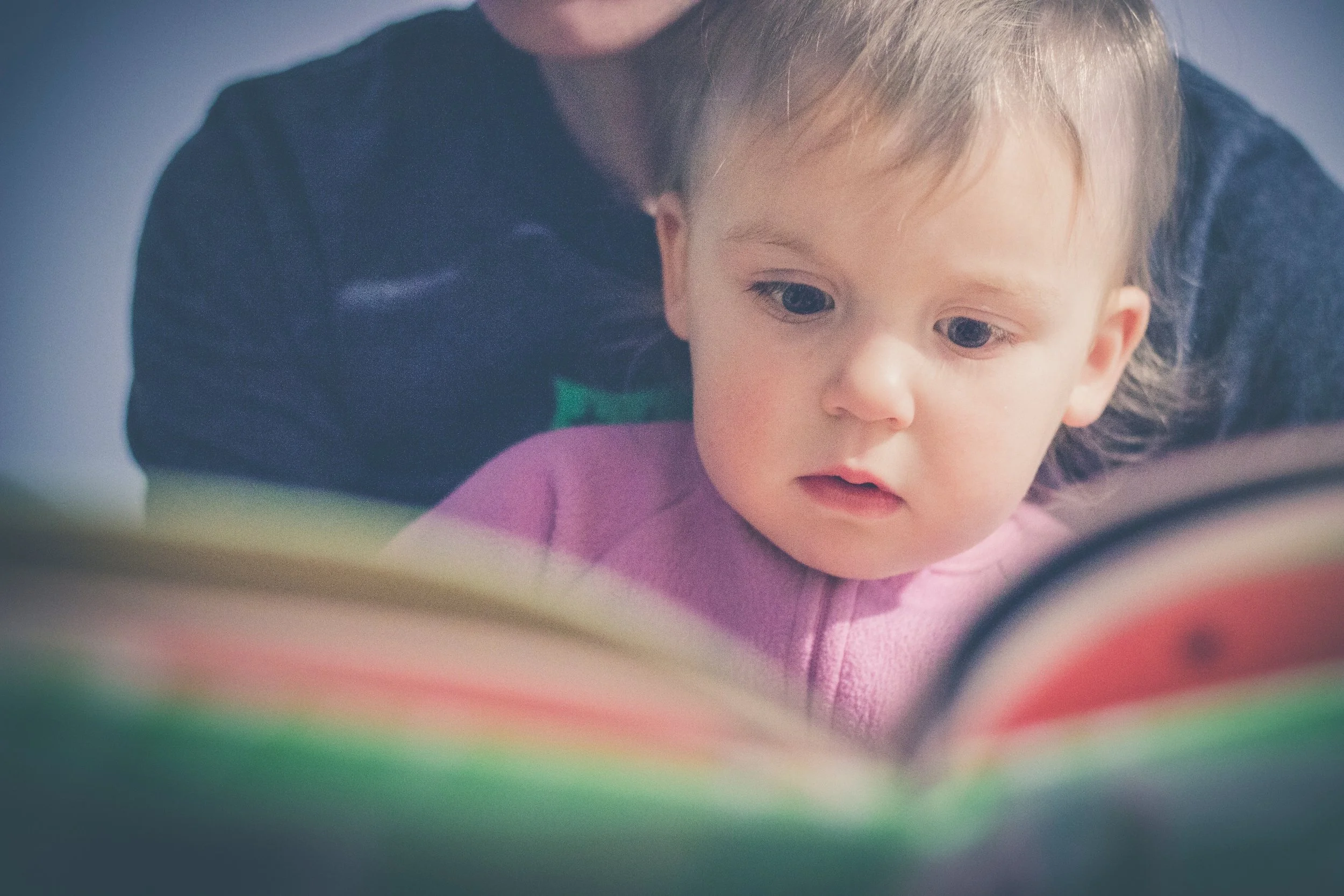
1. Read together daily, in both languages. Shared reading supports vocabulary and comprehension, especially when toddlers are allowed to read in their own way: pointing, naming, turning pages, skipping ahead, repeating favorite parts, and following what interests them.
2. Use responsive narration. Describe what your child is looking at, doing, or trying to communicate - “You’re putting on your shoes,” “You want the red car,” “I’m cutting the apple” - while following their interest and giving them space to take the lead.
3. Model correct language rather than correcting directly. Instead of “no, it's not 'goed,' it's 'went,'" simply respond using the correct form yourself: "Oh, you went to the park!"
4. Aim for sustainable routines, not rigid rules. It can help to create predictable moments for each language, such as bedtime stories, video calls with grandparents, or weekend activities. But what matters most is not a perfect language schedule; it is the quality of interaction: warm, responsive, meaningful communication that follows your child’s interests.
5. Create rich interaction, not just input. Conversation, books, songs, and everyday routines all matter, but children also need chances to take a turn - with words, gestures, sounds, pointing, or facial expressions. Instead of filling every silence, pause, wait, and let your child start or continue the interaction.
6. Resist comparing vocabulary counts to monolingual peers. Combined vocabulary, not single-language vocabulary, is the meaningful measure for a bilingual child.
When to Consult a Speech and Language Therapist or Bilingualism Expert: A Clear Decision Guide
Different concerns call for different kinds of support. Use this table to figure out where to start.
| Situation | Who to Consult | Urgency |
|---|---|---|
| A red flag is present for your child’s age | Bilingual speech-language pathologist / speech and language therapist specialised in working with bilingual families | As soon as possible |
| You are unsure about your family language strategy, but there are no red flags | Multilingual family consultant | When you are ready to create a clearer plan |
| Your child understands one language but does not speak it, with no red flags | Multilingual family consultant | When you want support with motivation, routines, and language use |
| You suspect a hearing issue, regression, or a major communication concern | Pediatrician/Family GP/Audiologist + speech-language pathologist / speech and language therapist | As soon as possible |
How to Find a Bilingual Speech-Language Pathologist
Ideally, an SLP should assess your child in both of their languages. Evaluating only the community language can lead to over-diagnosis, because normal bilingual patterns - such as a smaller vocabulary in one language when considered alone - may be mistaken for a genuine delay.
In practice, finding a bilingual speech-language therapist can be genuinely difficult, especially if your child speaks a less widely represented language or if you live in an area with limited multilingual services.
To find a qualified professional, you can start here:
In the United States, searchASHA’s ProFind directory, which allows filtering by language.
In the United Kingdom, theRoyal College of Speech and Language Therapists (RCSLT) provides directories and resources.
In Europe more broadly, theStanding Committee of SLT/Logopedists in the EU (CPLOL) can be a useful starting point.
Internationally, the Hanen directory can be a useful place to look for professionals with training in early language intervention.
For Italian-speaking families abroad, the Facebook group Logopedisti all’estero may also be a practical starting point, as many Italian speech and language therapists working internationally are members.
For stuttering or stammering, especially when looking for internationally minded specialists, the European Fluency Specialists directory can be another useful resource.
If no bilingual SLP is available locally, there are two practical alternatives: a video-call assessment with a bilingual SLP elsewhere, or an in-person evaluation supported by a qualified interpreter. Ideally, this should be someone trained for clinical contexts, not simply a bilingual family member.
Frequently Asked Questions About Bilingual Speech Delay
-
No. Research consistently shows bilingual children reach speech and language milestones within the same range as monolingual children. What can look like a delay is often a normal bilingual pattern - such as a smaller vocabulary in a single language - rather than a true delay in overall development.
-
Count the words your child uses across both languages combined, not just one. If the combined total is well below 80 words at 24 months, or if your child isn't combining any two words, it's worth discussing with a speech-language pathologist. If the combined count looks closer to typical ranges, this is likely a normal bilingual pattern.
-
No. There's no research evidence that reducing or eliminating a language helps a child with speech delay, and doing so can mean losing connection with family, culture, and community for no developmental benefit. A bilingual SLP can support both languages simultaneously.
-
Yes, ideally. The most effective approach uses a speech-language pathologist who can assess and support your child in both of their languages, since a delay or disorder typically shows up in both, not just one.
-
No, code-mixing is a normal and well-documented feature of bilingual language development, not a sign of confusion or delay. It often reflects a child reaching for whichever word comes to mind first, in whichever language offers it.
-
Start with professional directories such as ASHA in the US, RCSLT in the UK, or the Hanen directory for early language intervention. For Italian-speaking families abroad, the Facebook group Logopedisti all’estero may also be useful. If no bilingual professional is available locally, consider an online assessment or an in-person evaluation with a trained interpreter.
-
Not necessarily - if your child speaks confidently in one language but not the other, and understands both, this is more likely receptive bilingualism (understanding without producing) than a developmental delay. Our guide to receptive bilingualism covers this pattern and what helps.
-
Bilingualism does not cause either autism nor speech and language delays/difficulties, and autism does not depend on the number of languages a child is exposed to. If you suspect autism, please consult a pediatrician or developmental specialist promptly. A diagnostic evaluation should always be conducted by qualified professionals, taking into account all of the child’s languages.
Get Expert Guidance for Your Multilingual Family
If you've gone through the red flags above and nothing there matches your child's situation, that's genuinely reassuring news - what you're likely seeing is normal bilingual development, not a delay. But "no red flags" doesn't mean "no questions." Many parents reach this point still wondering how to keep both languages growing strong, how to handle a relative's unsolicited comments, or how to build a long-term family language strategy that actually fits their day-to-day life.
This is where strategic support - distinct from clinical care - can help. As a multilingual family consultant, I help families build and adjust their language strategy; I am not a speech-language pathologist, and I work alongside SLPs rather than in place of them.
If you’ve ruled out red flags but still want clarity, confidence, and a realistic plan for supporting both languages at home, my private consultations can help.
**A note on this article: This article does not replace medical advice. If you have concerns about your child's development, please consult a qualified speech-language pathologist. Bilingual children, like all children, deserve an assessment that takes their full linguistic profile into account.**
Reviewed by Dott. Gabriele Bianco - Speech and Language Therapist specialised in bilingualism, early intervention, and stuttering. BSc SLT, MSc, Reg HCPC. Italian TSRM-PSTRP Board Registration No. 182; UK HCPC Registration No. SL038510.
Last reviewed: July 1, 2026
About the Author
Dr. Karin Martin is a linguist, multilingual family consultant, author, trainer, and founder of The Multilingual Garden. She holds a PhD in Linguistics and has worked with multilingual families, educators, and international schools since 2014, supporting children growing up with more than one language.
Her work bridges research and real family life. She helps parents understand their child’s multilingual situation, make informed decisions about language use at home, and create realistic family language strategies that support long-term bilingual and multilingual development.
As a multilingual family consultant, she works with families on language strategy, heritage language maintenance, multilingual parenting abroad, school transitions, receptive bilingualism, and family language planning. She does not provide clinical diagnosis or speech-language therapy. When a child may need clinical assessment, she refers families to qualified speech and language therapists, ideally professionals with experience in bilingual or multilingual development.
She is the author of Watch Your Language, Mom! A Guide to Multilingualism and supports families through private consultations, parent seminars, training programs, and practical resources on multilingual child development.

References
Bialystok, E. (2001). *Bilingualism in development: Language, literacy, and cognition*. Cambridge University Press.
Filippi, R. (2023). A cross-sectional developmental approach to bilingualism. *Current Research in Behavioral Sciences, 4*, Article 100090. https://doi.org/10.1016/j.crbeha.2022.100090
Hoff, E., Core, C., Place, S., Rumiche, R., Señor, M., & Parra, M. (2012). Dual language exposure and early bilingual development. *Journal of Child Language, 39*(1), 1–27. https://doi.org/10.1017/S0305000910000759
Pearson, B. Z., Fernández, S. C., & Oller, D. K. (1993). Lexical development in bilingual infants and toddlers: Comparison to monolingual norms. Language Learning, 43(1), 93–120. https://doi.org/10.1111/j.1467-1770.1993.tb00174.x
Pearson, B. Z. (2008). Raising a bilingual child: A step-by-step guide for parents. Living Language.
Petitto, L. A., & Kovelman, I. (2003). The bilingual paradox: How signing-speaking bilingual children help us resolve bilingual issues and teach us about the brain’s mechanisms underlying all language acquisition. Learning Languages, 8(3), 5–18.
Roberts, T. A. (2014). Not so silent after all: Examination and analysis of the silent stage in childhood second language acquisition. Early Childhood Research Quarterly, 29(1), 22–40. https://doi.org/10.1016/j.ecresq.2013.09.001
Winsler, A., Kim, Y. K., & Richard, E. R. (2014). Socio-emotional skills, behavior problems, and Spanish competence predict the acquisition of English among English language learners in poverty. Developmental Psychology, 50(9), 2242–2254.