Receptive Bilingualism: Why Your Child Understands But Won't Speak Your Language (And What To Do About It)

You ask your child a question in your language.
“Com’è andata all’asilo?”
“Was hast du heute gemacht?”
“Com ha anat l'escola avui?”
And your child answers… in English.
Again.
This is why many parents describe the situation as: “My bilingual child only speaks English, even though they understand our home language.”
For many multilingual parents, this moment is deeply emotional. It can bring frustration, sadness, guilt, or even fear. You may start wondering:
Are they losing my language?
Am I doing something wrong?
Should I stop insisting?
If this sounds familiar, you are not alone.
If your child understands every word you say in your language but answers you in English (or the dominant language), you are not failing as a parent, you are facing one of the most common challenges in multilingual families: receptive bilingualism.
Many parents search for answers because their child understands but won’t speak the language, or because they wonder: “Why won’t my child speak my language?”
In simple words, a child can fully (or mostly) understand a language without actively speaking it. And this is very common in multilingual families.
In this article, we will explore:
what receptive bilingualism really is
why it happens
common emotional reactions in families
5 practical strategies to support your child
and when it may be helpful to seek professional guidance
What Is Receptive Bilingualism?
Receptive bilingualism, sometimes also called passive bilingualism, describes a situation in which a person understands a language but does not actively speak it, or speaks it very little.
In multilingual children, this often means that they can follow conversations, understand instructions, react emotionally to the language, and even show clear comprehension… while consistently responding in another language.
In simple words: their understanding (receptive skills) is stronger than their speaking (productive skills).
This is much more common than many families realize.
In my consultations with expat families in Spain, this situation comes up again and again: a child may understand the family language very well, yet answer in the school or community language. For example, a child might follow complex instructions in French, laugh at family jokes, and understand everyday conversations, but still respond in Spanish because that has become the easier or more dominant language for active communication.
In another case, a German-speaking father living abroad felt deeply frustrated because his son never responded in German. During our consultation, however, it became clear that the child understood stories, routines, and emotional nuances perfectly. The language was there, even if active speaking had not emerged yet.
For many parents, receptive bilingualism can feel confusing or even painful. But understanding the difference between comprehension and production is an important first step toward reducing pressure and supporting multilingual development more effectively.
Receptive vs. Passive Bilingualism: Is There a Difference?
Parents often come across two terms online: receptive bilingualism and passive bilingualism. They are frequently used interchangeably, but there is a small nuance worth understanding.
The term passive bilingualism is often used when someone had exposure to a language earlier in life but gradually stopped using it actively. In some cases, it can imply language loss over time.
Receptive bilingualism, on the other hand, focuses more specifically on the ability to understand a language without necessarily speaking it. The language is still actively processed and understood, even if verbal output is limited.
In real family life, however, the distinction is not always so clear-cut. Many parents use both terms to describe the same situation:
“My child understands me perfectly, but answers in another language.”
For this reason, if you are researching this topic online, you will often find both expressions used in articles, forums, and professional discussions.
What matters most is not the label itself, but understanding that comprehension and speaking do not always develop at the same pace in multilingual children.
Is Receptive Bilingualism Actually Bilingualism?
Yes. Absolutely.
One of the most important messages I want parents to hear is this: understanding a language is already a significant linguistic competence.
Too often, bilingualism is imagined as “perfect speaking” in two languages. But multilingualism is much more complex and dynamic than that.
A child who:
understands stories
follows conversations
reacts emotionally to a language
recognizes humor, routines, and meanings
is already developing bilingual competence, even if active speaking is still limited.
In other words: your child is bilingual.
They may simply be expressing bilingualism more strongly on the receptive side than on the productive side at this moment in their development.
This reframing is important because many families focus only on what the child is not yet saying, instead of recognizing everything the child already understands and processes internally.
In language development, comprehension and production do not always grow at the same speed. For some multilingual children, receptive bilingualism is a temporary phase. For others, it may remain part of their linguistic profile for many years.
Neither automatically means failure.
What matters most is continuing to create positive, meaningful, and emotionally safe experiences with the language.
Why Do Some Children Develop Receptive Bilingualism? (5 Common Causes)
Receptive bilingualism does not happen “out of nowhere.” In most cases, there are understandable social, emotional, and environmental reasons behind it.
Very often, it is not about a child rejecting a language completely, but about adapting to the context around them.
Here are five of the most common causes I observe in multilingual families.
1. Imbalanced Language Exposure
One of the biggest factors is simply exposure.
If one language is heard:
more hours per day
from more people
in more situations
it naturally becomes stronger.
Researchers such as Pearson have suggested that children often need around 20–30% consistent exposure to a language for active development to be realistically supported over time. Of course, every child is different, but quantity and quality of interaction matter.
For example, a child may hear Spanish only from one parent for one or two hours in the evening, while spending the rest of the day in English at school, with friends, activities, books, and media.
In this situation, understanding Spanish may still develop well, while active speaking becomes more limited.
2. Lack of Conversational Need
Children are incredibly practical communicators.
If they know that their parents understand the majority language, they may not feel a real need to actively use the minority language.
This is a key concept in multilingual development: children need a reason to speak the language.
For example, a child may answer in English even when the parent consistently speaks Italian, simply because communication still “works” without using Italian actively.
This does not mean the child dislikes the language. It often means: there is no strong communicative necessity attached to it.
3. Social and Peer Pressure
Around the age of 4-5, many children become increasingly aware of what is considered “normal” in their social environment.
They want to fit in.
If the majority language dominates school, friendships, and social interactions, some children may begin avoiding the minority language, especially in public.
This is particularly common in:
immigrant families
expat families
internationally mobile families
For example, a child who happily spoke Polish at home at age 3 may suddenly switch almost entirely to English after starting school because they want to sound like their classmates.
This shift can feel painful for parents, but it is often linked to belonging and social identity.
4. Emotional Associations With the Language
Languages are emotional.
Sometimes this can look like minority language refusal, but in many cases the child is not rejecting the language itself. They may be reacting to pressure, embarrassment, correction, or the feeling that speaking the language is too demanding.
Children associate languages with experiences, relationships, and feelings.
If the minority language becomes connected mainly to:
correction
pressure
conflict
constant requests to “say it properly”
the child may start avoiding it emotionally.
On the other hand, if the language is associated with:
play
warmth
storytelling
grandparents
enjoyable rituals
children are much more likely to engage with it naturally.
For example, one child I worked with rarely used Greek at home, but became much more engaged when the language was connected to playful cooking activities with the grandmother during visits abroad.
5. Inconsistent Parental Strategy
Consistency is one of the biggest challenges in multilingual parenting.
Many families begin with a clear plan, such as OPOL (One Parent One Language), but over time:
routines change
stress increases
school pressure appears
parents switch languages more often
Sometimes the minority language is gradually abandoned for weeks or months without fully realizing it.
Inconsistency does not automatically “ruin” multilingualism, but it can make active language use harder to maintain over time.
For example, a parent may begin speaking mostly the school language during busy weekdays “just temporarily,” but eventually the child starts expecting communication only in that language.
In multilingual development, consistency creates predictability - and predictability helps languages remain active.
Signs Your Child May Have Receptive Bilingualism
Every multilingual child is different, but some patterns may suggest receptive bilingualism. This means your child understands Language A, often the minority or heritage language, but prefers to respond in Language B, usually the dominant language of school, friends, or the wider community.
| Observation | What it may suggest |
|---|---|
| Your child follows instructions in Language A without needing translation. | Comprehension is already active. |
| Your child responds only, or mostly, in Language B. | Understanding may be stronger than speaking. |
| Your child laughs at jokes, stories, or funny expressions in Language A, but does not reproduce them. | They understand meaning and emotion, even without active output. |
| Your child shows no confusion when switching between languages in listening tasks. | They can distinguish the languages and process them separately. |
| Your child stays silent or switches languages when asked to speak Language A. | Speaking Language A may feel difficult, uncomfortable, or unnecessary. |
| Vocabulary recognition exceeds vocabulary production significantly in one language. | They know more words than they can actively use. This is common in receptive bilingualism. |
| Your child understands books, songs, or cartoons in Language A, but avoids speaking. | Input is being processed, but production may need more support. |
| Your child uses only a few isolated words or short expressions in Language A. | Speaking may be emerging slowly or only in specific contexts. |
| Your child switches immediately to Language B when conversation becomes more demanding. | Language B may feel safer, easier, or more socially useful. |
| Your child avoids phone or video calls with relatives because speaking Language A feels stressful. | Production may feel emotionally or socially demanding. |
One important thing to remember: receptive bilingualism is not “nothing.”
A child who understands a language is already processing grammar, vocabulary, sounds, emotions, and cultural meaning internally. Speaking may simply need more time, more motivation, more exposure, or different emotional conditions to emerge.
Is Receptive Bilingualism Permanent? Can It Be Reversed?
No, receptive bilingualism is not necessarily permanent, especially in children.
A child who understands a language but does not actively speak it is not “stuck” forever. In many cases, especially before puberty, receptive skills can become the foundation for active speaking when the right conditions are created: more exposure, more need to speak, more emotional safety, and more structured opportunities to use the language.
This is why I always invite parents to look at receptive bilingualism with both realism and hope.
Receptive bilingualism exists on a continuum and is not synonymous with silence. A receptive bilingual child is actively doing a great deal of linguistic work: complex processing, real-time comprehension, grammatical mapping, and meaning-making, even if that work is not yet visible in speech.
In other words, understanding is not “nothing.”
It is a base. And sometimes, a very strong one.
Research on heritage speakers has shown that receptive bilinguals can become active, productive bilinguals. Hurtado and Vega’s work on Spanish-English transmission, and Kondo’s work on heritage language development, are often cited in this context to show that the shift from receptive understanding to active use is possible when families create conditions for productive use, not only comprehension.
But this is important: it does not happen by magic.
A child will rarely start speaking the minority language simply because parents wish for it. Active bilingualism needs:
more meaningful exposure
more interaction with people who genuinely need that language
playful and low-pressure practice
consistent family language choices
positive emotional associations
community support when possible
For example, a child who understands Spanish but always answers in English may begin using more Spanish if they spend time with cousins who only speak Spanish, join a weekend group, visit family abroad, or start having small daily routines where Spanish becomes useful and emotionally rewarding.
So yes, receptive bilingualism can change.
How to Help Your Child Move From Understanding to Speaking: 5 Expert Strategies
Your child may understand your language very well, but still need support to start using it actively. The goal is not to force speaking. The goal is to create more natural, positive, and useful opportunities for your child to speak the language in real life.
So, if you are wondering about receptive bilingualism and how to fix the speaking gap, the answer is not pressure, but more meaningful opportunities to use the language.
Strategy 1: Create Low-Pressure Speaking Opportunities
Children are more likely to speak a language when they feel safe, relaxed, and not judged. This connects with Stephen Krashen’s idea of the affective filter: when children feel anxious, corrected, or put on the spot, speaking becomes harder.
How to apply it
Use predictable routines: bedtime phrases, songs, cooking together, simple games, or repeated questions with familiar answers. For example, instead of saying, “Say it in Italian,” you can create a small daily ritual where Italian naturally belongs, such as choosing a bedtime story or naming ingredients while cooking.
Family example
In my consultations with expat families in Austria, I see this pattern repeatedly: when a minority language is brought back through small, predictable routines, children often begin by responding non-verbally. They point, nod, choose, or react. Over time, if the routine stays relaxed and consistent, single words may appear first, followed by short phrases. Bedtime choices - one book or another, one song or another - can become a simple, low-pressure space where the child starts using the language again.
What to avoid
Do not correct your child in public, compare them to siblings or cousins, or turn the language into a test. Speaking should feel like connection, not pressure.
Strategy 2: Use the “I Don't Understand” Technique Strategically
In carefully chosen moments, a parent pretends not to understand the child's response in the dominant language - gently, warmly, without drama - creating a communicative need that only the heritage language can fill. Because the child already has the comprehension, the vocabulary is often closer to the surface than anyone realizes.
The key word is strategically. This is a tool, not a philosophy. It should be used sparingly, never during moments of distress, and never when the child genuinely needs to communicate something urgent. Used dogmatically, it becomes coercive and damages trust.
How to apply it
Choose low-stakes, playful moments: passing the salt, choosing a film, asking for a biscuit. Tilt your head, smile, say "Hmm? In Italian?" Wait. If the child tries even one word, celebrate it and move on. Never let the moment become a standoff.
Real family example
Marco, an Italian father in London, used this only at breakfast on weekends. He'd pretend to misunderstand his son's English requests for cereal with a theatrical “Non capisco!” His son, 7, started narrating the entire breakfast in Italian within two months, but only because the rest of the day remained pressure-free.
What to avoid
Never use this technique when the child is upset, tired, or talking about something emotionally important. Never apply it for more than a few minutes per day. If your child starts avoiding you or going to the other parent instead, stop immediately, the technique has crossed a line.
Strategy 3: Reinforce the One Parent One Language (OPOL) Approach
The One Parent One Language (OPOL) approach - each parent consistently uses their own language with the child - is the most researched strategy in bilingual family language planning. Its strength lies not in rigidity but in predictability: the child internalizes that language A belongs to person A, and over time, the social context itself becomes a production trigger.
Many families start OPOL and then let it slip under the pressure of daily life, school, and the dominant language's social gravity. Restarting is always possible. For families where OPOL doesn't fit the dynamic - single parents, families where both parents share the minority language - the Minority Language at Home (ML@H) model, where the heritage language is used exclusively at home regardless of who is speaking, is a well-documented and effective alternative.
How to apply it
If OPOL has lapsed, restart it openly and matter-of-factly: “From now on, I’ll try to speak French with you as much as possible.” Consistency matters more than perfection, slipping occasionally does far less damage than abandoning the structure altogether.
Real family example
Layla’s parents, a Lebanese-Australian couple in Melbourne, had gradually shifted to English at home when their daughter started school. At age 8, they decided to bring Arabic back more intentionally through an ML@H approach, using Arabic as much as possible in daily family routines. Within six months, Layla, who had almost stopped speaking Arabic but still understood it well, began using it again in everyday conversations. Her comprehension had never disappeared; what changed was the family context that made speaking Arabic feel useful again.
What to avoid
Avoid making OPOL a source of conflict between parents, or using it as a rule to punish with. If maintaining the structure consistently causes significant family stress, adjust the plan rather than force it. ML@H can work well for some families, but it is not realistic for everyone. Flexible routines, dedicated language moments, and support from relatives, books, media, or community activities can also strengthen the child’s exposure without creating unnecessary pressure.
Strategy 4: Immersion Trips and Heritage Language Exposure
Research on language reactivation consistently finds that two to three weeks of genuine immersion - visiting the heritage country, attending a language camp, spending time with cousins who only speak the minority language - can unlock production. The mechanism is communicative necessity combined with an overwhelming flood of naturalistic input at the right register.
The child cannot opt out. The language is not a lesson; it is the only available tool for getting a snack, making a friend, or understanding what a grandparent just said. That functional urgency bypasses the affective filter more effectively than any classroom exercise.
How to apply it
Plan at least one immersion experience per year if possible - a trip, a heritage language summer camp, or an extended stay with monolingual relatives. Prepare the child beforehand with enthusiasm, not anxiety.
Real family example
Tomás, age 9, had never produced a full sentence in Polish despite understanding his Warsaw grandparents perfectly. After three weeks in Poland - surrounded by monolingual cousins his own age - he returned to Toronto speaking in paragraphs. His mother reported the change happened in the second week, not gradually.
What to avoid
Don't frame the trip as a language lesson or “fix.” Children who feel they are being sent somewhere to be corrected often resist. Frame it around relationships and fun - the language learning is the side effect, not the goal.
Strategy 5: Build Community Around the Language
The most powerful long-term predictor of heritage language production is whether the child wants to speak the language. And children want to speak languages that are cool, useful, and socially alive. A language that only exists at home, between a child and an authority figure, will always struggle against the social magnetism of the dominant language. The solution is to give the heritage language a peer dimension.
Heritage language playgroups, complementary schools, cultural associations, and friendships with other bilingual families transform the language from a family obligation into a social identity - something the child claims, rather than merely tolerates.
How to apply it
Seek out Saturday language schools, cultural weekend events, or online groups for heritage speakers. Even one close friendship with another child who speaks the language changes everything - peer motivation is a production trigger no parent can fully replicate.
Real family example
Nina, a 10-year-old Greek-Canadian in Toronto, had resisted Greek for years despite understanding it fluently. When her parents enrolled her in a Greek dance troupe - not a language class - she made two close friends who mixed Greek and English freely. Within one school year, Nina was code-switching at home without prompting, for the first time in her life.
What to avoid
Avoid community environments that feel formal, corrective, or exclusively adult. Children don't want to be the worst speaker in the room. Look for mixed-ability, play-centred spaces where the language is the medium, not the subject - and where imperfect production is normal and welcome.
What NOT to Do When Your Child Won't Speak Your Language
Many multilingual parents have been there: you speak your language, your child answers in another. The instinct to fix it fast is natural, but some common reactions tend to backfire. Here's what to avoid.
| Common Mistake | Why It Can Backfire |
|---|---|
| Forcing the child to speak | Creates pressure and negative emotions around the language |
| Scolding or correcting constantly | Can reduce confidence and willingness to communicate |
| Comparing them to siblings or cousins | Makes children feel inadequate or “behind” |
| Showing disappointment | Children may associate the language with guilt or stress |
| Giving up the language too quickly | Reduces exposure and opportunities for natural development |
| Switching completely to the majority language | Can weaken emotional connection to the heritage language |
When to Seek Professional Help: Receptive Bilingualism vs. Speech Delay
Receptive bilingualism is not a language disorder. It's a common usage pattern, and in most cases, completely normal. That said, there are moments when professional support is worth seeking.
If your child shows signs of delayed communication across all their languages (not just one), struggles to follow simple instructions, or isn't reaching general speech milestones, it's worth consulting a speech therapist.
On the other hand, if the challenge is more about family dynamics, identity, or motivation around language use, a multilingual family consultant may be a better fit.
Frequently Asked Questions About Receptive Bilingualism
-
Not automatically. If your child understands the language well, responds appropriately, and communicates normally in another language, this may be receptive bilingualism rather than a developmental concern. The next step is to look at exposure, motivation, emotional safety, and real opportunities to use the language.
-
Yes. Understanding a language fully is a genuine linguistic skill, even without speaking it. Receptive bilinguals process grammar, vocabulary, and nuance - they simply don't produce the language actively. Many researchers consider it a valid point on the bilingualism spectrum, not a failed version of it.
-
Yes, and it happens more often than people think. Adults with a receptive foundation can activate a dormant language through immersion, classes, or simply deciding to start speaking it. The grammar and vocabulary are already there - what's needed is practice and the willingness to make mistakes.
-
It typically becomes visible between ages 3 and 6, when children start school and the dominant language of their environment takes over. They continue understanding the home language but increasingly respond in the language of their peers. It can also deepen during adolescence, when social identity plays a stronger role.
-
It can, but only as a gentle prompt, not as a tactic to pressure the child. In relaxed, everyday moments, a smile and a simple “In Italian?” may encourage the child to try. But if the child is distressed, tired, or trying to say something important, connection comes first. Used occasionally, it can support production; used too rigidly, it can create resistance.
-
Start by reducing the pressure. Embarrassment usually signals that the child fears judgment - from peers, siblings, or even you. Create low-stakes moments: a private joke in your language, a show you watch together, a ritual that belongs just to the two of you. Make the language feel like a bond, not an obligation.
-
Yes. Consistency is one of the most powerful things you can do. Your child is still listening, still absorbing, still building comprehension - even when they give no visible sign of it. Switching to the dominant language may feel easier, but it removes the only reliable input they have.
-
Not exactly. Language attrition refers to the gradual loss of a language someone previously spoke. Receptive bilingualism often develops before active production is ever fully established - the child understands but never consistently spoke the language. The two can overlap, but they have different origins and different paths forward.
-
In many cases, yes. If the child still understands the language, that receptive foundation can support active speaking later. The process usually requires more exposure, more real need to use the language, and emotionally safe opportunities to practise.
-
There's no fixed timeline - it depends on motivation, exposure, and opportunity to practice. Some people activate a dormant language in a few months of immersion; others take years of gradual effort. The receptive foundation makes the process faster than learning from scratch, but consistent, low-pressure practice is key.
Book a Private Family Language Assessment
Every multilingual family has its own language story. In a private Family Language Assessment, we look closely at your child’s current language situation, your family routines, the languages spoken at home and school, and the questions or worries you may have.
This session is not about judging your choices or comparing your child to monolingual standards. It is a research-based conversation designed to help you understand what is really happening, what your child needs, and which strategies are realistic for your family.
After the session, you will leave with greater clarity, practical recommendations, and a personalized language plan you can start applying at home with confidence.
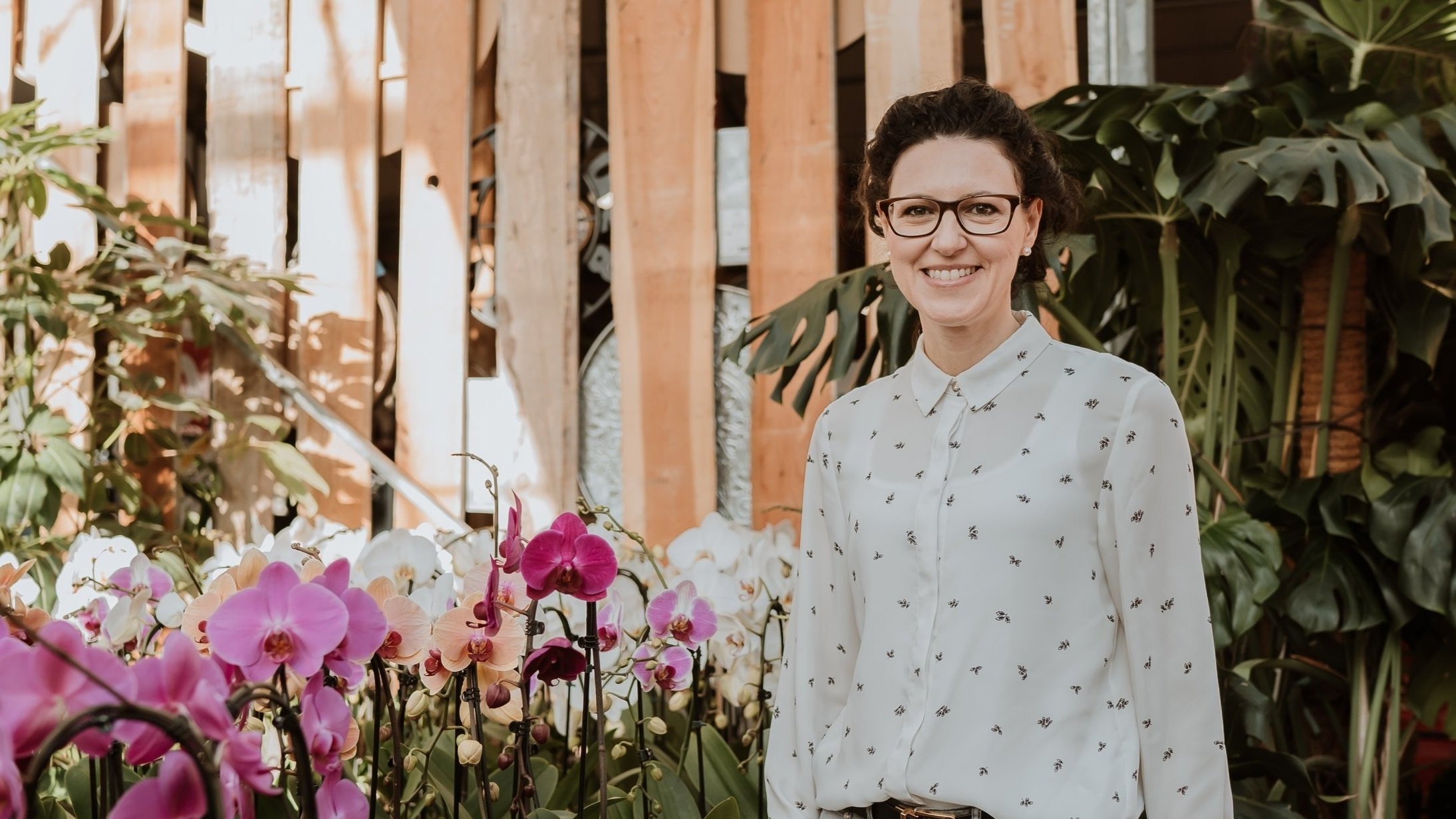
Dr. Karin Martin is a linguist, multilingual family consultant, author, trainer, and founder of The Multilingual Garden. She holds a PhD in Linguistics and has worked with multilingual families, educators, and international schools since 2014.
Her work bridges research and real family life, helping parents make informed, confident decisions about language development, heritage language maintenance, OPOL, school transitions, and multilingual parenting abroad.
She is the author of Watch Your Language, Mom! A Guide to Multilingualism and supports families through private consultations, parent seminars, training programs, and practical resources.
Learn more about Karin’s work and background.
Medical Disclaimer
This content is for educational purposes only and does not replace medical, developmental, or speech-language advice.
If you have concerns about your child’s speech, language development, hearing, or communication, please consult a qualified speech and language therapist.
Multilingualism does not cause speech delay, but speech and language difficulties can still occur and should be assessed by a qualified specialist.
References
American Speech-Language-Hearing Association. (n.d.). Multilingual service delivery in audiology and speech-language pathology [Practice Portal]. https://www.asha.org/practice-portal/professional-issues/multilingual-service-delivery/
Appiah, K. A. (1993). Thick translation. Callaloo, 16(4), 808–819.
De Houwer, A. (2015). Harmonious bilingual development: Young families' well-being in language contact situations. International Journal of Bilingualism, 19(2), 169–184.
Grosjean, F. (2008). Studying bilinguals. Oxford University Press.
Krashen, S. D. (1982). Principles and practice in second language acquisition. Prentice-Hall International.
Pearson, B. Z. (2008). Raising a bilingual child: A step-by-step guide for parents. Living Language / Random House.
Sherkina-Lieber, M. (2020). A classification of receptive bilinguals: Why we need to distinguish them, and what they have in common. Linguistic Approaches to Bilingualism, 10(3), 412–440.
Soto-Corominas, A. (2024). Minority language exposure predicts multilingual receptive abilities in Catalan-Spanish bilingual children. International Journal of Bilingual Education and Bilingualism, 28(3), 358–374.