Heritage Language: How to Keep Your Family Language Alive at Home When Living Abroad
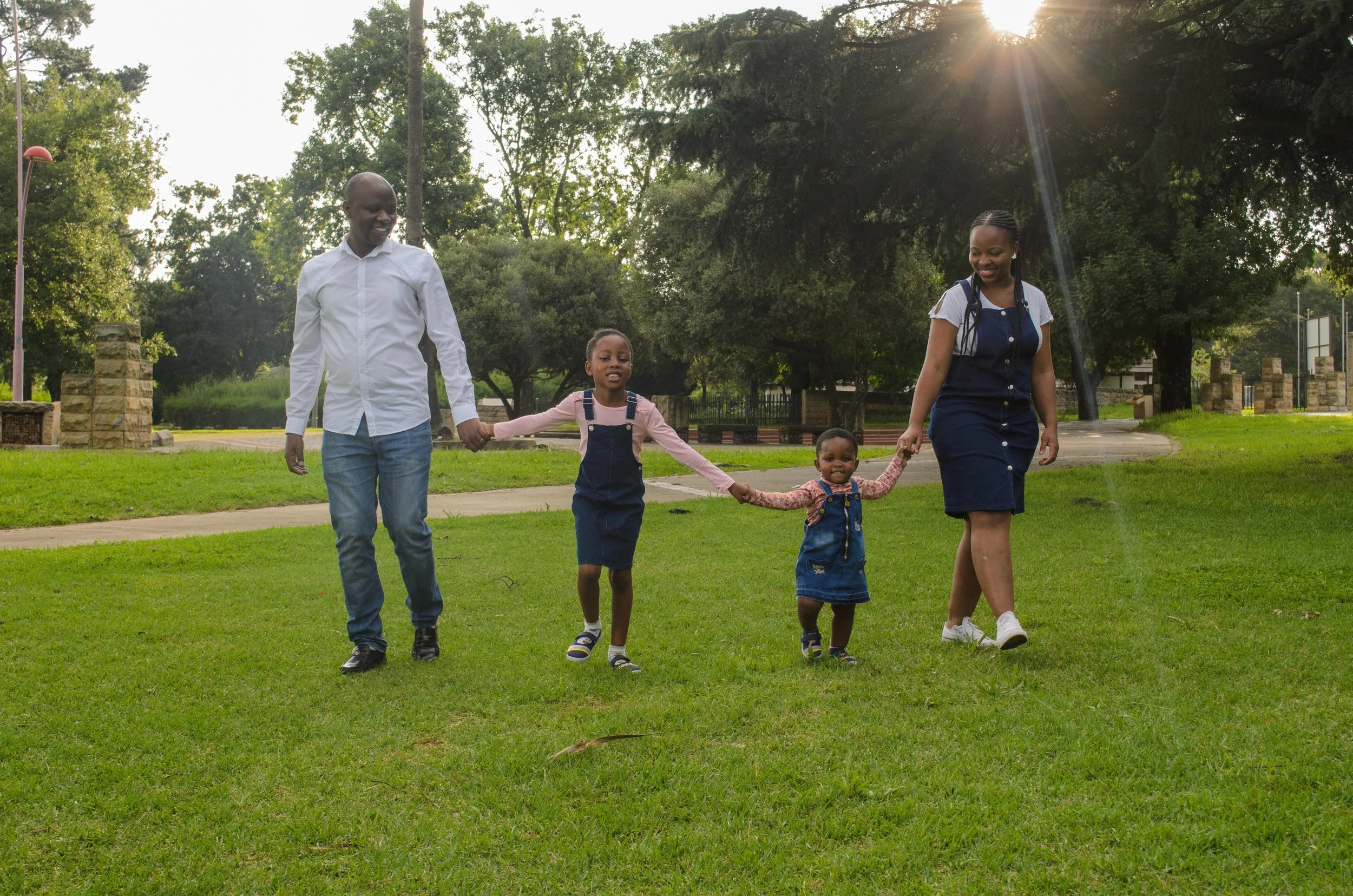
The first time your child answers “Mom, I don't know how to say that anymore” in their heritage language, it feels like watching a door close. Heritage language loss is one of the most painful - and most preventable - losses in expat families.
This guide shows you how to keep that door open.
A heritage language is the language connected to a child’s family, roots, and emotional history. It may be spoken by parents, grandparents, or relatives. For many multilingual families abroad, it is also the language that becomes weaker once the school or community language takes over.
This guide explains what a heritage language is, why children may stop speaking it, how to support it by age, and when to ask for expert help. For many families, this is also part of the wider journey of raising bilingual children at home while navigating the pressure of a dominant school or community language.
In this guide:
What is a heritage language?
Why heritage languages are at risk
The benefits of maintaining your heritage language
7 strategies to keep it alive at home
Strategies by age
Common mistakes expat parents make
Heritage language schools and programs
When to get expert help
Frequently asked questions
Support for your heritage language journey
Maintaining a heritage language is not about perfection. It is about connection, continuity, and giving your child access to part of who they are.
What Is a Heritage Language? (Definition and Examples)
A heritage language is the language of a child's family and cultural background that is a minority language in the community where they live. It's the language spoken at home - the one used with grandparents, at family dinners, during holiday traditions - but not the dominant language of school, neighbors, or public life.
In simple terms: the language your family brought with them, surrounded by a different language outside the front door.
This sets it apart from two related but distinct concepts. A first language (or mother tongue) is the language a person learned first, regardless of family origin - for many immigrant children growing up in a new country, the community language eventually becomes their strongest language, making it their functional first language even if the heritage language came earlier. A second language is any language learned after the first, typically through formal instruction.
Heritage languages exist on a spectrum. Some children speak the language fluently and naturally at home. Others understand it well but struggle to produce it. Still others have only a passive familiarity - recognising words and emotional tones without being able to form sentences. All of these count as heritage language relationships.
The concept also carries cultural weight beyond linguistics. Heritage languages encode family history, religious practice, oral traditions, and a sense of belonging to a diaspora community. Losing it is rarely just about words - it often means losing access to grandparents, ancestral identity, and a part of oneself.
Common examples around the world:
Spanish in the United States
Italian in Germany
Urdu in the United Kingdom
Mandarin in Australia
Arabic in France
Polish in Ireland
Tagalog in Canada
In each case, the pattern is the same: a language vital to the family's identity and internal communication, set against a dominant community language that exerts constant pressure on children to assimilate. Without deliberate effort - at home, in community programs, or through heritage language schools - children typically shift toward the dominant language within one to two generations.
Heritage Language vs. Mother Tongue vs. Second Language: What's the Difference?
These three terms are often confused and sometimes overlap. Here's how linguists and educators typically distinguish them:
| Term | Definition | Acquisition Context | Can Overlap? |
|---|---|---|---|
|
Mother tongue / L1 (debated term in multilingual contexts) |
Usually the first language an individual acquired in early childhood, though this can be more complex for multilingual children | Natural, implicit, usually through early home and family interaction | Often the same as the heritage language in first-generation families |
| Second language / L2 | A language introduced after another language has already begun to develop, regardless of proficiency | Formal or informal; through school, family, community, or later exposure | Can become dominant; for many heritage speakers, this is the school or community language |
|
Heritage language (often the home language) |
The family or ancestral language that is a minority language in the surrounding community | Mostly at home and with family; often connected to emotions, identity, and relationships | May be the mother tongue, a second language, or neither — depending on the individual |
These categories are not mutually exclusive. A child raised bilingual from birth may have two mother tongues - one of which is also the heritage language.
Who Is a Heritage Speaker?
Heritage speakers share a common background - a family language different from the community language - but they don't all look alike. Not all heritage language speakers have the same level of fluency, confidence, or literacy, and this is why support needs to be adapted to the child’s real profile rather than to an ideal image of bilingualism.
In educational contexts, these children are often described as heritage language learners, especially when they understand or speak the family language but need support to develop stronger oral skills, literacy, or confidence.
Linguists identify three broad profiles:
Fluent heritage speaker
Near-native command of the language. Speaks naturally in most family and community contexts, though may have gaps in formal register or literacy.
Heritage learner
Limited but real oral ability - understands and speaks with gaps, mixing, or reduced grammar. Typically more comfortable in the community language. Benefits most from heritage language programs.
Understands the heritage language well but rarely or never speaks it. Comprehension is strong; production is minimal or absent. This is often the profile of third-generation children.
All three are valid forms of heritage connection - though each requires a different kind of support to maintain or develop the language further.
Why Heritage Languages Are at Risk in Expat and Immigrant Families
Heritage languages don't disappear overnight. They erode gradually, through a combination of structural pressures that are largely invisible until the damage is done. Understanding these forces is the first step toward countering them.
Dominance of the Community Language
From the moment a child enters school, the community language becomes the language of everything that matters to them: learning, friendship, play, and eventually social identity. It's the language of the teacher, the playground, the screen, and the group chat. The heritage language, by contrast, is confined to the home - and increasingly, only to interactions with parents or grandparents.
This asymmetry is not neutral. Children are acutely sensitive to which language carries prestige and which does not. When the minority language lives only behind the front door, children learn quickly that it has limited social utility - and motivation to use it declines accordingly. Hours of input matter enormously in language development; a language spoken only at dinner simply cannot compete with one present for eight or more hours a day.
The “Critical Period” Misconception
A common fear among expat parents is that there is a hard cutoff - a point of no return - beyond which a child can no longer acquire a heritage language naturally. This is a misreading of the evidence. Researchers generally agree that there is no sharp developmental cliff before puberty that permanently closes the door on a language.
What is true, and important, is that the time investment required grows steeply with age. A toddler absorbs language through ordinary daily exposure. A ten-year-old needs structured input and motivation. A teenager requires sustained effort, strong identity connection, and often formal instruction. The window does not slam shut, but it narrows progressively, and reopening it costs more each year.
The practical implication: earlier is easier, not because later is impossible, but because the scaffolding required compounds over time. Starting now is always better than waiting for a "better moment."
Generational Drop-Off
Heritage language loss across immigrant generations follows a well-documented pattern. Linguists call it the "three-generation model": the first generation is typically dominant in the heritage language, the second grows up bilingual, and the third is functionally monolingual in the community language.
Generation 1 - Immigrant parents
Heritage dominant - Arrived with the language; community language is the second language.
Generation 2 - Their children
Heritage & Community - Bilingual, but community language typically becomes dominant by school age.
Generation 3 - Grandchildren
Community only - Heritage: passive or lost. Heritage language rarely transmitted unless actively maintained.
Breaking this pattern is possible - diaspora communities around the world have done it - but it requires deliberate, sustained effort rather than passive assumption that the language will survive on its own.
Lack of Family Language Policy
In the absence of an explicit plan, the minority language at home loses by default. This is not a matter of parental commitment or cultural pride - it is simply the path of least resistance. As children grow more fluent in the community language, family conversations drift toward it; parents respond in the language their child uses; the heritage language is gradually crowded out without anyone deciding to abandon it.
Researchers in family bilingualism use the term “Family Language Policy” (FLP) to describe the conscious decisions families make about which language to use at home, when, and with whom. Families with an explicit FLP - even a simple one - consistently outperform those without one in heritage language maintenance.
The Real Benefits of Maintaining Your Heritage Language
The case for heritage language maintenance is not only sentimental; it is also supported by research. Four distinct bodies of evidence point in the same direction: maintaining the heritage language is good for children's brains, their schooling, their family relationships, and their long-term prospects.
Cognitive development
Managing two active languages simultaneously trains the brain's executive control system, the set of mental processes responsible for attention, switching between tasks, and filtering out irrelevant information. Some studies have found that bilingual children may show advantages on tasks requiring inhibitory control and cognitive flexibility. Heritage language proficiency also develops metalinguistic awareness: the ability to think about language as a system, which makes learning any additional language significantly easier.
Academic transfer
Strong literacy in the heritage language does not compete with community language learning, it can support and accelerate it. Cummins' interdependence hypothesis, backed by decades of empirical work, shows that academic skills developed in one language transfer to another: phonological awareness, reading comprehension strategies, and vocabulary depth all cross language boundaries. Children who develop literacy in their heritage language can benefit from skills that transfer across languages, including reading comprehension, vocabulary knowledge, and phonological awareness.
Identity and family bonds
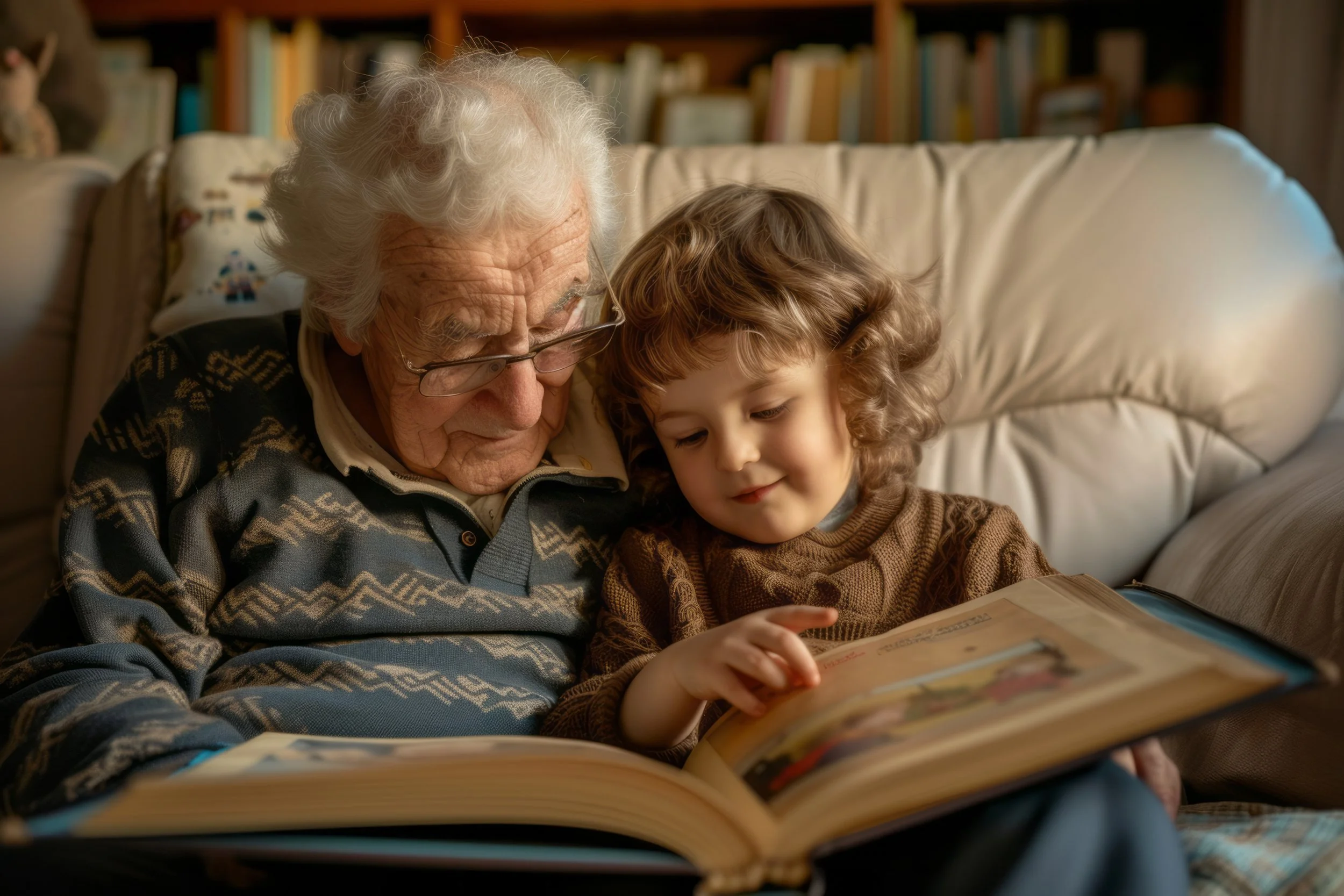
Language is not just communication, it is access. When children lose the heritage language, they may also lose direct, emotionally rich access to grandparents and extended family. Wong Fillmore's landmark study of over 1,000 linguistic minority families found that heritage language loss frequently damages family relationships in ways that are difficult to repair. Beyond family, heritage language proficiency has been linked to stronger bicultural identity, higher self-esteem in immigrant-background children, and better psychosocial wellbeing.
Professional and pragmatic value
A language maintained through childhood can become a genuine professional asset in adulthood, often bringing a depth of cultural and communicative experience that classroom learning alone may not provide. Heritage speakers bring not just vocabulary but cultural fluency, register sensitivity, and authentic communicative competence - qualities in demand in international business, diplomacy, healthcare, social work, and education. In increasingly mobile labor markets, the heritage language is often the one skill that cannot be outsourced or easily replicated.
Maintaining a heritage language is not only a cultural choice. It can offer cognitive, academic, emotional, social, and professional benefits, especially when children receive consistent support over time. These benefits are easiest to build in early childhood and can become more difficult to recover once the language has been lost.
How to Keep Your Heritage Language Alive at Home: 7 Proven Strategies
Many parents search for practical advice on how to keep a heritage language alive when the school language starts to dominate. The answer is not one perfect method, but a combination of consistent routines, emotional connection, community, and age-appropriate literacy support.
1. Create a Family Language Plan (FLP)
A Family Language Plan is the deliberate answer to a question most families never ask out loud: who speaks what, to whom, and when? It helps you decide how, when, and with whom your child will use the heritage language at home, so that the language does not depend only on occasional moments or parental energy.
The plan does not need to be elaborate. At its core it defines three things: the language rules for different contexts (home, extended family, travel), the goals you want to reach at one, three, and five years, and how you will handle the inevitable moments when children push back. Families with an explicit FLP are usually better equipped to maintain the heritage language than families who rely only on hope and habit.
By age: for children under six, a simple “one parent, one language” (if relevant for your family) rule is often enough. From six onwards, include children in the plan, participation builds ownership.
Common error: treating the FLP as a fixed contract rather than a living document. Revisit it every six months.
To make this easier, I created a simple one-page Family Language Plan Template you can use to start clarifying your own family language routines, goals, and priorities.
2. Maximize Quality (and Quantity) of Input
Speaking the heritage language at home is necessary but not sufficient. What matters is rich input, the kind that stretches a child's linguistic range beyond “pass the salt” and “get your shoes on.” Read aloud daily. Have complex conversations about things that actually interest them: how engines work, why the sky is blue... Introduce vocabulary outside the domestic register: emotions, abstract concepts, current events. Some researchers suggest that children may need the heritage language to occupy around 25–30% of their waking hours for meaningful acquisition to occur. That figure is harder to reach than most parents expect.
By age: under six, quantity dominates - immersion through daily routines. From seven onwards, quality becomes the bottleneck: aim for at least one substantive, open-ended conversation per day.
Common error: conflating presence with input. A language running in the background is not the same as meaningful interaction.
3. Build a Print-Rich Heritage Language Environment
The physical environment of a home communicates which language is real. If every book, label, cereal box, and sticky note is in the community language, children absorb that message before they can read. Counter it deliberately: stock shelves with heritage language books at every level, label objects around the house, keep grandparents' letters and postcards somewhere visible. Literacy in the heritage language is one of the strongest predictors of long-term maintenance; children who learn to read in it are more likely to keep using it into adulthood.
By age: 0–4: picture books and read-alouds daily. 5–8: early readers and comics. 9–12: chapter books and magazines they actually want to read.
Common error: buying books once and never replenishing. The print environment must grow with the child.
4. Use Media Strategically (Not as Babysitter)
Heritage language music, audiobooks, and cartoons are legitimate tools - under one condition: the child is engaged, not just “parked”. Passive screen exposure contributes much less to acquisition than interactive language use, especially under age five. What works is co-viewing with conversation afterwards: “Why do you think she did that?” “What would you have done?” Audiobooks during car journeys are particularly effective with older children who resist more overt language work. Choose content they genuinely want, not content you think is educational.
By age: under 3, limit screens regardless of language. 4–8: songs, cartoons, audiobooks. 9+: series, podcasts, and sports commentary they choose themselves.
Common error: community language subtitles. They train reading, not listening. Use heritage language subtitles or none.
5. Connect with the Heritage Language Community
A language spoken only with parents is a language with a ceiling. When the heritage language exists only at home, children may begin to perceive it as a domestic language rather than a living tool for friendship, community, learning, and identity. The antidote is community: heritage language playgroups, weekend complementary schools, cultural associations, religious communities, and other bilingual families in similar situations. When a child uses the language with peers and feels socially rewarded for it, motivation shifts from external obligation to internal identity. Without community, parents often feel as if they are swimming upstream alone.
By age: 0–5: parent-and-child groups. 6–10: complementary school and cultural events. 10+: youth programs and peer friendships where the language is the norm.
Common error: relying on the weekend school as the primary strategy. Two hours a week cannot carry a language that has no home presence.
6. Plan Regular Immersion Trips
Two to four weeks per year in the heritage language country - especially with monolingual relatives and peers, not in tourist mode - can produce noticeable gains in fluency and, more importantly, in motivation. Children who experience the language as a tool for real life develop a relationship with it that home input alone rarely achieves.
For families who cannot travel, other options can still be genuinely useful: online heritage language camps, video call routines with grandparents or cousins, and virtual exchange programs that pair children with peers from the heritage country.
By age: any age benefits from immersion. Over eight, time spent with monolingual peers, not just family, produces the greatest gains in fluency and confidence.
Common error: spending the trip in family tourist mode, switching to the community language whenever it is easier. The immersion value comes from full contact with the local environment.
7. Develop Heritage Language Literacy
Spoken fluency without literacy is fragile. Many expat families successfully maintain oral heritage language use through childhood, but later notice that their children's proficiency becomes more limited if they never learned to read and write in it. Written language is one of the main ways complex thought is expressed, recorded, and shared; without it, the heritage language may remain limited to an informal, domestic register. Formal literacy instruction - through a heritage school, a tutor, or structured home practice - helps build the academic range that spoken home language alone may not fully provide. For non-Latin scripts, early exposure to the writing system matters especially, before competing literacy demands crowd it out.
By age: 5–7: introduce the script alongside community language literacy. 8–12: sustained reading and simple writing practice. 12+: authentic texts: news articles, stories, and correspondence.
Common error: waiting until spoken fluency feels solid before starting literacy. The two reinforce each other; waiting too long means starting from scratch with a resistant older child.
Heritage Language Strategies by Age (0-3, 3-6, 6-12)
The seven strategies apply across all ages, but the emphasis shifts significantly as children develop. Here is what to prioritize at each stage.
Ages 0-3: Foundation Years
This is the highest-return window in heritage language development: the brain acquires language simultaneously across two systems without conflict, and exposure requires no motivation from the child, only consistent presence from the parent.
Ages 3-6: Identity Forms
School entry brings the first real pressure point, children become aware their home language is different, and early resistance often appears not as rejection but as embarrassment. This is the moment to build community and cultural pride alongside continued input.
Ages 6-12: Literacy Years
Oral acquisition is no longer effortless, and spoken fluency alone is no longer enough, this is the stage to formalize reading and writing in the heritage language before competing demands make it exponentially harder. Linking the language to what the child already loves turns maintenance from a chore into a habit.
The following table summarises how heritage language strategies change by age, what to prioritize, and what parents should watch out for at each stage.
| Age | Primary focus | Key strategies | What to introduce | Watch out for |
|---|---|---|---|---|
|
0–3 Foundation years |
Maximum input Minimal conscious effort from the child |
Daily read-alouds Songs and nursery rhymes Grandparent video calls Set the FLP now |
Heritage language book collection One-parent-one-language rule (if applicable) |
Assuming exposure "just happens" Counting background TV as input |
|
3–6 Identity forms |
Community and cultural pride Responding to first resistance |
Heritage language playgroups Cultural events and traditions Strategic media (co-viewing) First immersion trip (if possible) |
Complementary or weekend heritage school Peer friendships in the language Picture books with heritage script |
Punishing language refusal Respond with connection, not pressure Letting embarrassment go unaddressed |
|
6–12 Literacy years |
Formal literacy Interest-led input and identity as motivation |
Reading and writing instruction Regular immersion trips Interest-linked content (sports, music, gaming) Heritage school with literacy focus |
Authentic texts (news, fiction, correspondence) Non-Latin script practice (if applicable) Child-chosen media in the language |
Mistaking oral fluency for full proficiency Delaying literacy until “later” Later may become never |
Common Mistakes Expat Parents Make with Heritage Languages
1. Giving up when children push back
Resistance is normal and developmentally predictable, not a signal that the language isn't working. Many children go through a refusal phase between ages four and eight; families who respond calmly and consistently often come out the other side.
2. Mixing languages without structure
Code-switching is a natural feature of bilingual life, but unstructured mixing at home can reduce the child’s need to fully operate in either language. Keep contexts clear: this conversation is in the heritage language, even if it is harder.
3. Waiting for the right moment to start
Many parents delay because the child isn't ready, the family isn't settled, or life is too busy. There is no ideal moment. Over time, delayed exposure can make active use harder to develop and may lower the level of fluency a child is likely to reach.
4. Demanding perfection and over-correcting
Constant correction kills the will to speak. A child who is frequently interrupted to fix grammar may choose silence over risk. Prioritize fluency and confidence first; accuracy follows with time and literacy.
5. Leaving grandparents out of the plan
Grandparents can be one of the most powerful assets in heritage language maintenance - native speakers who often bring emotional connection, family history, and strong motivation. Families that build regular, structured contact with grandparents often create more meaningful and lasting opportunities for children to use the heritage language.
6. Separating the language from its culture
A language stripped of its food, music, stories, and humour becomes an exercise, not an identity. Children are more likely to maintain languages they feel proud of than languages they experience only as an obligation.
Heritage Language Schools and Programs: What to Look For
Heritage language schools vary enormously in quality. A good one can strengthen everything else you are doing at home; a poor fit can create resistance without meaningful progress. Here is what to evaluate before enrolling.
Frequency and duration.
Two hours once a week may be a useful starting point; programs that meet more frequently, or that offer intensive holiday camps, usually provide stronger continuity and more opportunities for progress. Check whether the school year is long enough to matter.
Teacher qualifications.
Strong teachers usually have advanced proficiency in the language and some training in heritage language pedagogy, not only fluency or good intentions. Ask whether teachers understand the difference between a heritage learner and a foreign language learner. They are not the same student and should not be taught the same way.
Literacy focus.
Many complementary schools prioritize oral culture and folklore over reading and writing. Both matter, but by around age six, a program without a literacy component may leave one of the most durable skills underdeveloped.
Class composition and ratio.
Mixed-age or mixed-proficiency classes can work well if the teacher is skilled; they can become difficult if the group is too diverse and there is not enough individual support. Ask about group size: when there are more than fifteen children per teacher, it may become harder to follow each child’s individual progress.
Community, not just curriculum.
Strong programs build a social world around the language: events, performances, parent networks, and peer friendships that exist outside classroom hours. If the school is only a classroom, it may not provide the social motivation children need to keep using the heritage language outside lesson time.
Parent involvement.
Schools that actively involve parents - sharing strategies, setting home goals, and communicating progress - are usually more effective than those that treat families as passive customers.
When Heritage Language Maintenance Becomes Difficult: Getting Expert Help
Sometimes, keeping a heritage language alive requires more than reading more books, creating routines, or increasing exposure at home. This does not mean that you have failed; it means that your family situation may require more careful guidance.
You may want to seek expert help if your child understands the heritage language but consistently refuses to speak it. This situation is often called receptive bilingualism. This can happen when children understand the family language well but feel more confident, comfortable, or socially accepted in the community language.
Support can also be useful when parents disagree about which languages to use at home, when one parent feels excluded from communication, or when language choices become part of broader family or co-parenting tensions. In international divorces or separated families living across countries, language can become emotionally and practically sensitive, especially when children move between homes, languages, and school systems.
Another delicate moment often comes during adolescence. Teenagers may reject a heritage language because they want to fit in, distance themselves from a family identity, or avoid feeling different from their peers.
In all these situations, you do not have to navigate the process alone. A consultation can help you understand what is happening, clarify your family language goals, and create a realistic plan that respects your child’s age, personality, and emotional needs.
If this resonates with your family situation, you are welcome to explore my consultation service and see whether this kind of support could be the right next step for you.
Frequently Asked Questions About Heritage Languages
-
A mother tongue is usually understood as the first language a person acquired, although for multilingual children this can be more complex. A heritage language is specifically the family or ancestral language that is a minority in the surrounding community. They often overlap - but not always. A child born abroad may acquire the community language first, making it their functional mother tongue, while the family language remains their heritage language.
-
There is no hard cutoff, but the type of support a child needs changes with age. A toddler absorbs language through daily exposure; a ten-year-old needs structured input and motivation; a teenager needs identity connection and often formal instruction. Starting later is harder and slower - but it is not impossible, and it is always worth starting.
-
Yes. Consistently. Children who receive heritage language input but respond in the community language are still acquiring the language passively - and passive acquisition becomes active production when motivation aligns. If parents always switch to the community language when children resist, children may learn that they do not need to use the heritage language actively.
-
Occasional code-switching is normal and linguistically harmless. Unstructured mixing as the default mode can be more problematic because it may reduce the child’s need to fully operate in either language. Keep at least some contexts clearly designated as heritage language only, even if you are flexible elsewhere.
-
Some researchers suggest that the heritage language may need to occupy roughly 25–30% of a child’s waking hours for meaningful acquisition to occur - approximately 25–30 hours per week for a young child. That figure is higher than most families realize. Every source of input counts: conversation, books, media, and community time all contribute toward the total.
-
Research generally points in the opposite direction. Strong literacy in the heritage language transfers directly to the community language — reading comprehension, vocabulary depth, and phonological awareness all cross linguistic boundaries. Children who develop biliteracy can benefit academically because many literacy skills transfer across languages, including reading strategies, vocabulary knowledge, and phonological awareness.
-
Yes, though it requires more deliberate structure. One parent consistently using the heritage language - even if the other parent does not speak it - can provide a meaningful baseline. Grandparents, heritage schools, tutors, and community connections can supplement significantly. The key is ensuring the child has enough hours of input from enough sources to compensate for what the non-speaking parent cannot provide.
-
As one layer in a broader strategy, yes. As a standalone solution, they are usually not enough. Two hours a week cannot carry a language that has no home presence. Heritage schools are most effective when they extend and formalize what is already happening at home - adding literacy, peer community, and cultural context to the input children are already receiving daily.
Get Support for Your Heritage Language Journey
Every heritage language journey looks different. Some families are just starting out; others have been struggling with resistance for years. Some children speak fluently but struggle with reading and writing; others understand everything but refuse to speak. Wherever you are, the challenges are real, and so are the solutions.
In a Multilingual Family Consultation, we look at your child's current heritage language situation, your home routines, and the specific pressures your family is navigating - whether that is a recent move, a resistant teenager, a non-speaking partner, or simply not knowing where to start.
You will leave with a clear picture of where your child stands, what is actually driving the patterns you are seeing, and a practical, personalised plan built around your family's real life.

Dr. Karin Martin is a linguist, multilingual family consultant, author, trainer, and founder of The Multilingual Garden. She holds a PhD in Linguistics and has worked with multilingual families, educators, and international schools since 2014, supporting children growing up with more than one language.
Her work bridges research and real family life, helping parents make informed, confident decisions about heritage language maintenance, multilingual parenting abroad, school transitions, and family language planning.
She is the author of Watch Your Language, Mom! A Guide to Multilingualism and supports families through private consultations, parent seminars, training programs, and practical resources on multilingual child development.
Learn more about Karin’s work and background here.
Medical Disclaimer
This content is for educational purposes only and does not replace medical, psychological, or speech-language advice.
As a multilingual family consultant, I can help you understand your child’s multilingual situation, clarify your family language goals, reflect on emotional and relational dynamics around language use, and create a realistic plan for heritage language maintenance.
However, I do not diagnose or treat speech, hearing, psychological, or learning disorders. If you have concerns about your child’s speech development, hearing, mental health, or possible specific learning difficulties, please consult a qualified speech and language therapist.
Multilingualism does not cause speech delay, but speech, language, hearing, or learning difficulties can still occur and should be assessed by qualified professionals when needed.
References
Center for Applied Linguistics. (n.d.). Heritage languages in the United States. https://www.cal.org/heritage
Cummins, J. (1979). Linguistic interdependence and the educational development of bilingual children. Review of Educational Research, 49, 222–251.
De Houwer, A. (2007). Parental language input patterns and children's bilingual use. Applied Psycholinguistics, 28(3), 411–424.
Fishman, J. A. (1964). Language maintenance and language shift as a field of inquiry. Linguistics, 2(9), 32–70.
King, K., Fogle, L., & Logan-Terry, A. (2008). Family language policy. Language and Linguistics Compass, 2(5), 907–922.
Kouritzin, S. G. (1999). Face[t]s of first language loss. Lawrence Erlbaum.
Linguistic Society of America. (2012). Resolution on the status of heritage languages. https://www.linguisticsociety.org
Montrul, S. (2016). The acquisition of heritage languages. Cambridge University Press.
Polinsky, M., & Kagan, O. (2007). Heritage languages: In the 'wild' and in the classroom. Language and Linguistics Compass, 1(5), 368–395.
Portes, A., & Rumbaut, R. G. (2001). Legacies: The story of the immigrant second generation. University of California Press.
Valdés, G. (2001). Heritage language students: Profiles and possibilities. In J. K. Peyton, D. A. Ranard, & S. McGinnis (Eds.), Heritage languages in America: Preserving a national resource (pp. 37–77). Center for Applied Linguistics & Delta Systems.
Wong Fillmore, L. (1991). When learning a second language means losing the first. Early Childhood Research Quarterly, 6(3), 323–346.