5 Misconceptions About Multilingual Learners We Need to Rethink
What if some of the difficulties we associate with multilingual learners are not actually problems with their language development, but problems with the lens through which we see them?
I am delighted to share a new collaboration with Zab Translation Solutions, created especially for educators, school leaders, and professionals working with multilingual students and families.
For their LinkedIn Newsletter, I was invited to explore some of the misconceptions that continue to shape how multilingual learners are understood and supported in education.
And there are still many.
When language ability is mistaken for intellectual ability
A child who cannot yet express a complex idea in the language of schooling may nevertheless be perfectly capable of understanding that idea.
This distinction sounds obvious, but it has profound consequences in education.
When language proficiency becomes a proxy for cognitive ability, multilingual students risk being underestimated and academically under-challenged.
One of the central messages of my article is therefore simple:
A student can think deeply long before that thinking becomes visible in the school language.
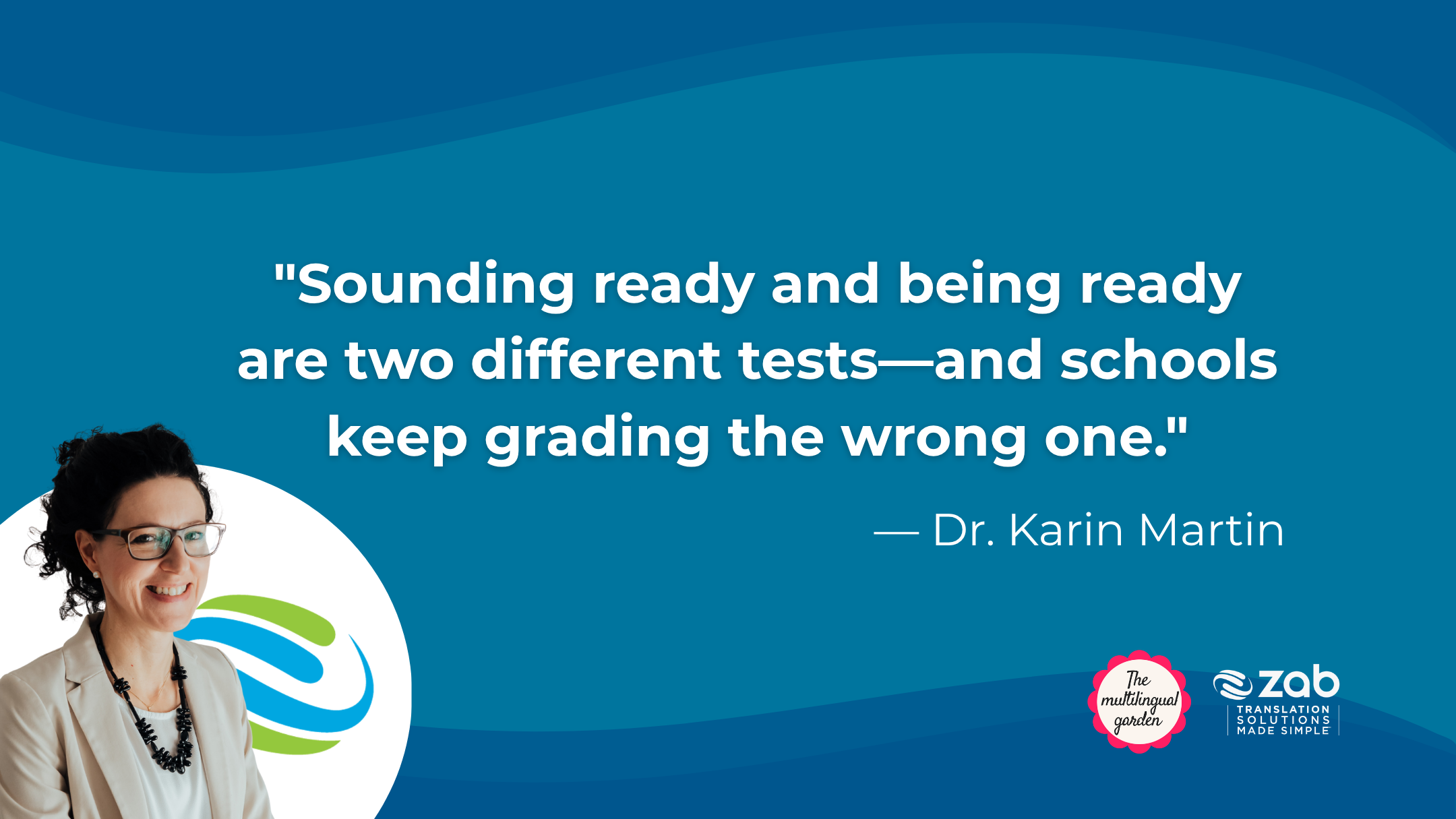
When conversational fluency is mistaken for academic readiness
Another common misconception appears when children become comfortable speaking the school language.
They chat with classmates. They understand instructions. They participate.
It can look as though the language-learning process is complete.
But conversational fluency and academic language are very different things. The language needed to compare, justify, infer, analyze, or write about complex concepts can take considerably longer to develop.
For schools, recognizing this difference matters because withdrawing language support too early can create academic difficulties that only become visible much later.
When families are encouraged to abandon the home language
Families raising multilingual children are still sometimes advised to prioritize the school language at home, particularly when a child is experiencing difficulties.
Yet home languages are not obstacles standing in the way of learning.
Knowledge and skills developed through one language can support learning through another. And language is about much more than academic performance.
Our family languages carry relationships, memories, cultural knowledge, identity and belonging.
When a child is asked to leave their language at the door, they are also being asked to leave part of themselves.
Schools can play an enormously important role here by making it clear to families that their languages are welcome and valuable.
When translation is considered enough
Providing translated information is essential for equitable communication with multilingual families.
But translation alone does not automatically create understanding.
A message can be linguistically accurate and still fail to reach the people it was intended for if we ignore cultural context, register, literacy levels, community expectations, or different understandings of how families and institutions communicate.
This is where translation needs to become part of a broader approach to localization and inclusive communication.
As I put it in the article:
“Translation delivers words. Localization delivers meaning. Only one of them builds trust.”
Perhaps the biggest misconception: seeing multilingualism through a deficit lens
These different misconceptions ultimately lead us to a deeper question.
What do we notice first when we look at a multilingual learner?
Too often, attention goes immediately to what the student cannot yet do in the school language.
The vocabulary they do not yet have.
The academic language they are still developing.
The communication support their family may need.
But this can make an extraordinary linguistic repertoire almost invisible.
Multilingual learners do not arrive at school linguistically empty. They bring languages, knowledge, experiences, cultural perspectives, relationships, and different ways of making meaning.
Changing the lens from deficit to resource changes the questions we ask, and potentially the educational decisions we make.
What would our classrooms look like if schools were designed to notice those resources from the start?
These are some of the questions I explore in greater depth in my new article, “Common Misconceptions Educators Have About Multilingual Language Acquisition,” developed in collaboration with Zab Translation Solutions.
The full article includes research references, practical implications for school leaders, and a closer look at how multilingual learners can be supported through more asset-based educational frameworks.
👉Read the full article in the Zab Translation Solutions LinkedIn Newsletter.
Supporting multilingual children in your school or family?
At The Multilingual Garden, I bridge research and practice to help families, educators, and organizations make informed decisions about multilingualism.
Explore the resources, articles, consultations, and professional training available through The Multilingual Garden, or simply drop me a message if you’d like to discuss how I can support you, your family, or your organization.