The Hidden Work of Multilingualism
Who Really Adapts in Everyday Communication?
A small moment in a waiting room
Blood analysis today. Just a routine appointment. I was sitting there, waiting for my turn, in the beautiful Catalan city I chose as my home.
Behind the counter, a woman was speaking.
She moved between Spanish and Catalan with a speed I can’t even imagine. It wasn’t just fast, it was harmonious. Almost musical. Two languages, perfectly intertwined: they belonged together in this space.
I found myself listening, almost fascinated.
And then, something shifted.
A person walked in.
They didn’t speak Spanish.
They didn’t speak Catalan.
Only English.
Not a tourist. Just someone navigating life here, using English as if it were the default everyone should adapt to.
And there she was.
She switched languages again.
This time, in English. Hesitating, but still speaking. Not without effort, but doing her best.
She explained what to do next, where to go, how to speak to the doctor. Calmly. Clearly. Kindly.
You wouldn’t have noticed, despite the struggle.
Just adaptation. The invisible work we rarely notice.
A few minutes passed. It was my turn.
I walked up to her and couldn’t help myself, I complimented her.
Her language skills.
Her flexibility.
The way she moved between languages so naturally.
I asked her if English was required for the job.
She smiled.
“Not really… but many people who come don’t speak Spanish or Catalan. I’m lucky: I learned English at school.”
And I remember thinking:
How many times does she do this every day?
How many conversations like this happen, unnoticed, unacknowledged, taken for granted?
Because what I witnessed wasn’t just “someone speaking English.”
It was effort.
It was cognitive work.
It was emotional labor.
It was someone stepping out of their linguistic comfort zone to make sure another person could access a system, a service, a moment of care.
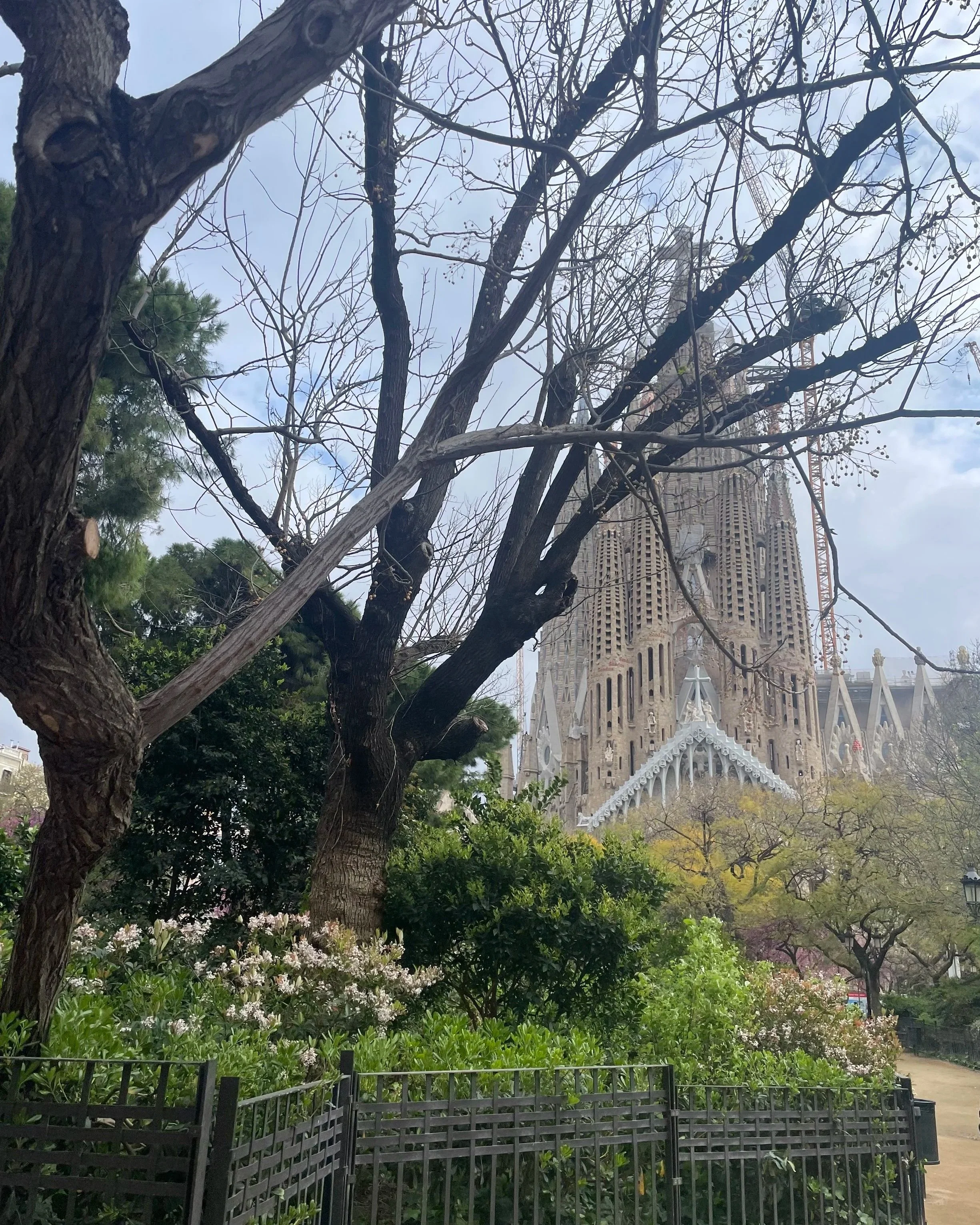
Who is adapting?
We often talk about multilingualism as a skill.
Something impressive.
Something to celebrate.
And yes, it is.
But what we don’t talk about enough is who is doing the adapting.
In many everyday situations, it’s not the person arriving in a new country who adjusts linguistically.
It’s the person behind the counter.
The nurse.
The receptionist.
The worker who switches languages, not because they have to, but because they can.
And because someone needs them to.
Stop apologizing for your English!
This is my message to all the people who work in a language that is not their own:
Stop apologizing.
You are not “less professional” because you search for words.
You are not “less competent” because of your accent.
You are the one adapting.
You are the one making the effort.
And that matters.
Sometimes, I can’t help but think: it should be the other way around.
Why wouldn’t that person apologize for not speaking Spanish?
During my book world tour, I often found myself saying,
“I’m sorry I don’t speak Croatian.”
“I’m sorry I don’t speak Thai.”
“I’m sorry I don’t speak Japanese.”
And then I would move on, with Google Translate on my phone, doing my best to adapt.
An invitation to notice
This is simply an invitation to notice something we often overlook.
Because what I saw today is part of a much bigger picture.
This is how societies evolve.
Through movement.
Through contact.
Through migration.
And yes, let’s be honest, often through what we could call privileged migration, where people move and continue using a global language like English instead of adapting to local ones.
But regardless of the context, one thing remains:
There is always someone adapting.
A quiet thank you
So this is a small, quiet thank you.
To the people who:
🙏 switch languages
🙏 adapt constantly
🙏 make communication possible
🩵 even when it’s not required
🩵 even when it’s not recognized
🩵 even when no one says anything
I see you.
I appreciate you.
And I cherish what you do.
Because without you, many everyday interactions simply wouldn’t work.
Final reflection
Next time you’re in a shop, a clinic, or a school, pause for a moment.
Listen.
Notice the language choices happening around you.
Ask yourself:
👉 Who is adapting in this moment?
Because behind many of these everyday interactions, there are families navigating new systems, new languages, and new expectations, all at the same time.
And that’s not always easy.
If you are raising your children in a new country and wondering how to support them between languages, identities, and different cultural expectations, you don’t have to figure it out alone.
This is exactly the kind of work I do with families every day: helping them find clarity, confidence, and a sustainable way forward in their multilingual journey.
If this resonates with you, I’m here to support you on your multilingual journey.